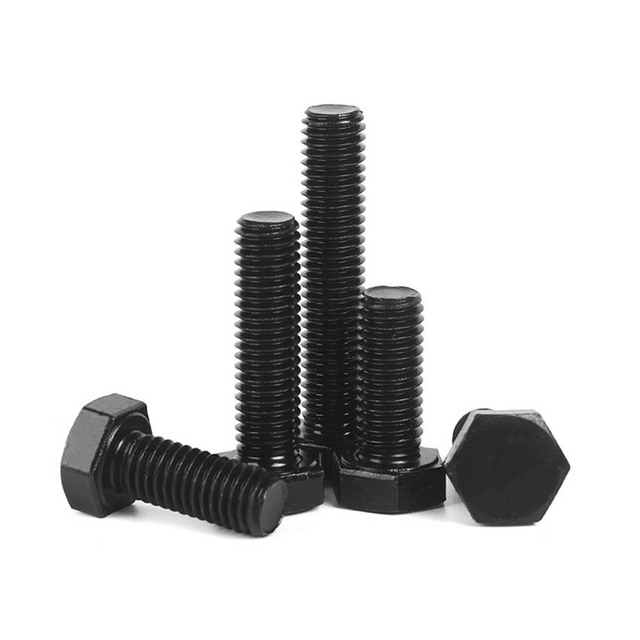
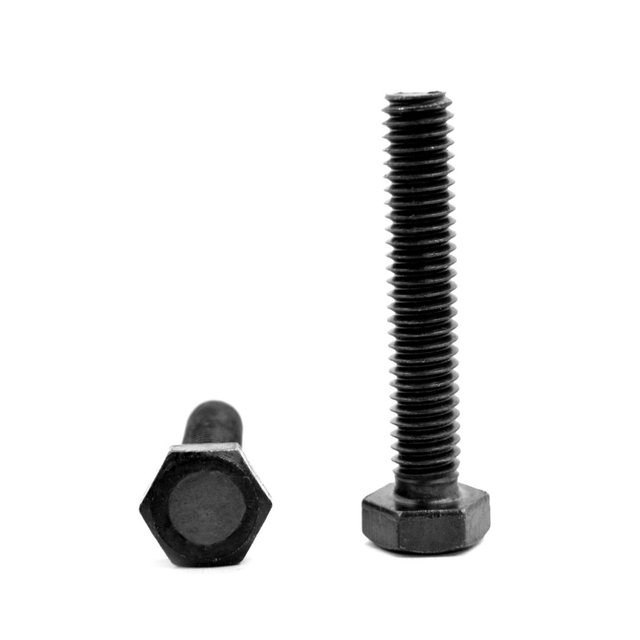
Hex bolts are threaded fasteners with a six-sided head designed for installation with a wrench or socket. They are widely used where a strong, serviceable bolted connection is required in machinery, equipment, construction and general industrial assembly.
WEIFENG supplies hex bolts in a range of diameters, lengths, thread configurations, property classes, materials and surface finishes, including DIN 931 and DIN 933 options, carbon steel fasteners and stainless steel grades such as SS304 and SS316.
Selecting the right hex bolt requires more than choosing diameter and length. Buyers should also consider the standard, full or partial thread, strength/property class, material, surface finish, joint loading and installation conditions.
Use the following factors as a starting point when specifying a hex bolt:
| Selection Factor | What to Consider |
|---|---|
| Standard | DIN 931, DIN 933 or project-specific requirement |
| Thread Configuration | Full thread or partial thread |
| Property Class | Select according to required mechanical performance |
| Material | Carbon steel or stainless steel |
| Surface Finish | Black, zinc-plated, plain or other specified finish |
| Diameter & Length | Match joint geometry and required engagement |
| Application | Machinery, structural assembly, equipment or general fastening |
For engineering applications, the selected bolt should match the mechanical requirements of the complete joint rather than being chosen solely on the basis of the highest available strength class.
DIN 931 and DIN 933 hex bolts differ primarily in their thread configuration.
| Feature | DIN 931 | DIN 933 |
| Thread Type | Partial Thread | Full Thread |
| Unthreaded Shank | Present depending on size/length | Generally no long unthreaded shank |
| Typical Selection Consideration | Useful where part of the joint bears on the smooth shank | Useful where greater thread engagement or adjustment range is needed |
| Available Materials | Depending on product specification | Depending on product specification |
A DIN 933 full-thread hex bolt is suitable when threads are required over most or all of the bolt shank.
A DIN 931 partial-thread hex bolt provides an unthreaded shank section and may be preferred where the joint design requires a smooth bearing section through the connected components.
Always select the standard according to the drawing, joint design and applicable engineering specification.
For metric high-strength carbon-steel bolts, property class is an important indicator of mechanical performance.
Based on the supplied technical reference:
| Property | Grade 8.8 | Grade 10.9 |
| Nominal Tensile Strength | ≥800 MPa | ≥1040 MPa |
| Yield Strength | ≥640 MPa | ≥900 MPa |
| Yield-to-Tensile Ratio | 0.80 | Approx. 0.865 |
| Elongation After Fracture | ≥12% | ≥9% |
| Reference Vickers Hardness | HV 250–320 | HV 320–380 |
The key point is that a higher strength class is not automatically the better choice for every joint.
Grade 10.9 provides higher tensile and yield strength, making it relevant to more heavily loaded fastening applications. However, the supplied technical data also shows lower elongation than Grade 8.8, meaning less plastic deformation is available before failure.
Grade 8.8 may therefore remain appropriate where the required load level is lower and greater deformation capacity is desirable.
Bolt class should always be selected according to the actual joint design, required preload, loading condition and applicable engineering specification.
Typical applications in the supplied technical reference include:
General machinery assembly
Standard load-bearing bolted connections
Applications without severe fatigue requirements
Industrial equipment fastening
Grade 8.8 combines useful strength with greater elongation than the referenced Grade 10.9 values.
Typical applications include:
Heavy-duty structural connections
Automotive chassis applications
Heavy machinery
Connections requiring higher preload
Higher-strength applications require greater attention to correct bolt selection and tightening control.
Note: Availability of a specific property class should be confirmed for the individual WEIFENG product before ordering.
Another important selection factor is how much of the bolt shank is threaded.
Full-thread bolts provide thread engagement along most or all of the shank.
They can be useful when:
The nut position needs adjustment
Connected components are relatively thin
Thread engagement is required through a larger portion of the bolt length
DIN 933 products are commonly associated with full-thread configurations.
Partial-thread bolts include a smooth, unthreaded shank section between the head and threaded portion.
They may be selected when:
A smooth shank passes through the connected components
The joint design requires an unthreaded bearing section
The specified drawing calls for a DIN 931 configuration
The correct choice depends on the joint geometry and engineering requirements.
WEIFENG supplies both carbon-steel and stainless-steel hex bolt options.
Carbon-steel bolts are widely used for machinery, industrial equipment and general structural fastening. Mechanical property class and surface treatment should be selected according to the required strength and service environment.
Available product configurations may include black and coated finishes depending on the specific bolt.
Stainless-steel hex bolts are suitable where corrosion resistance is an important purchasing factor.
WEIFENG product options include SS304 and SS316 DIN 931 / DIN 933 hex bolts.
When choosing between carbon steel and stainless steel, do not compare the products only by material name. Consider:
Required mechanical performance
Corrosion exposure
Temperature and operating environment
Fastener standard
Matching nut and washer
Project specification
Surface finish can affect corrosion protection, appearance and suitability for the service environment.
Depending on product specification, WEIFENG hex bolts are available with finishes such as:
Black finish / black oxide
Zinc-plated finishes
Plain stainless steel
Other finishes according to project requirements
The correct coating should be selected according to exposure conditions and the required corrosion resistance.
Hex bolts are widely used to assemble machine frames, components, equipment and replaceable mechanical parts where controlled clamping is required.
Depending on the specified grade and standard, hex bolts can be used in steel connections, supports and other construction assemblies.
Higher-strength bolting may be required for heavily loaded automotive or equipment connections. Property class and tightening requirements should be determined from the joint specification.
DIN 931 and DIN 933 hex bolts provide versatile solutions for industrial assembly requiring standardized metric fasteners.
To receive an accurate quotation, provide as much of the following information as possible:
Standard: DIN 931 / DIN 933 / other
Thread diameter
Bolt length
Thread pitch
Full or partial thread
Property class / strength requirement
Material
Surface finish
Quantity
Application or drawing
Packaging requirements
If the application involves a high-strength bolted joint, provide the required property class and applicable technical specification rather than requesting only a general “high-strength bolt.”
WEIFENG supplies hex bolts for different industrial fastening requirements, with options including:
DIN 931 and DIN 933 configurations
Full-thread and partial-thread bolts
Carbon-steel fasteners
SS304 and SS316 stainless-steel bolts
Different mechanical property requirements
Multiple dimensions and finishes
OEM and customized fastening solutions
Send us your standard, size, material, property class, finish and quantity for product selection and quotation.