
 English


Views: 0 Author: Site Editor Publish Time: 2025-11-06 Origin: Site


Have you ever wondered how certain nuts keep machinery safe and secure? A slotted nut is an essential fastener that plays a crucial role in various applications.
In this article, we’ll explore what a slotted nut is, its unique features, and how it compares to other types of nuts. You’ll learn about its radial slots and the locking mechanism that ensures reliability in critical situations.
A slotted nut is a type of fastener designed for secure connections in various applications. It features radial slots that allow for easy installation and removal. This unique design makes slotted nuts particularly effective in high-vibration environments, where other nuts might loosen over time.
Slotted nuts are typically made from durable materials such as carbon steel or stainless steel. They come in various sizes to fit different bolts and screws. The key characteristic is the presence of slots that provide a means for locking the nut in place.
● Material: Commonly carbon steel or stainless steel
● Shape: Round or hexagonal, depending on the application
● Slots: Radial cuts that enhance grip and locking ability
When comparing slotted nuts to other types, such as castle nuts and locknuts, several differences stand out.
Feature | Slotted Nut | Castle Nut | Locknut |
Locking Mechanism | Cotter pin | Pin or wire | Friction |
Installation Ease | Easy to install | Requires alignment | Requires torque |
Vibration Resistance | High | Moderate | High |
Each type has its own strengths, but slotted nuts offer unique advantages in specific scenarios.
The standout feature of a slotted nut is its radial slots. These slots serve a crucial purpose: they allow for a cotter pin to be inserted, which locks the nut in place. This locking mechanism prevents the nut from loosening due to vibrations or movement.
● Purpose: To accommodate a cotter pin for secure locking
● Design: Positioned around the circumference for easy access
The locking mechanism of a slotted nut is straightforward yet effective. After the nut is tightened onto a bolt, a cotter pin is inserted through the slot.
1. Tightening: The nut is tightened to the desired torque.
2. Insertion: A cotter pin is pushed through the slot.
3. Bending: The ends of the cotter pin are bent to secure it in place.
This simple process ensures that the nut remains securely fastened, making it ideal for applications where safety is paramount.
By understanding these essential aspects of slotted nuts, you can appreciate their vital role in various industries, from automotive to construction.
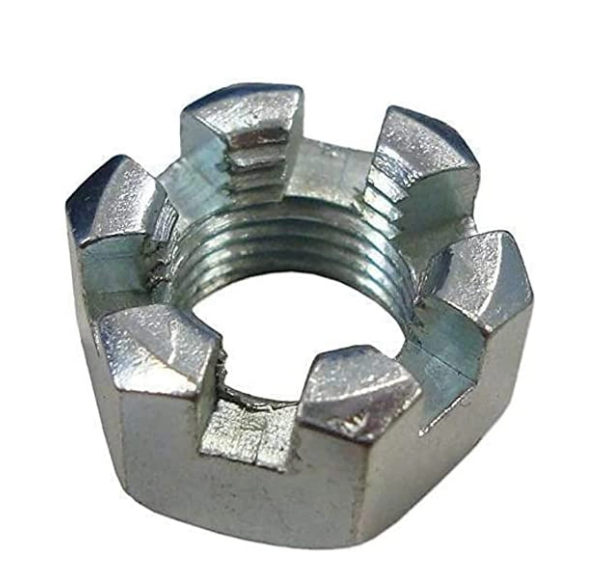
Slotted nuts play a vital role in engineering and manufacturing due to their unique design. They ensure that components remain securely fastened, especially in environments where vibrations can cause standard nuts to loosen. This reliability makes them essential for maintaining the integrity of various assemblies.
In safety-critical applications, slotted nuts are indispensable. They are commonly used in machinery, vehicles, and structures where failure could lead to accidents or injuries. Their locking mechanism, which often involves a cotter pin, provides an extra layer of security.
● Enhanced Stability: Prevents loosening under stress
● Reliable Performance: Ensures components stay in place
● Easy Inspection: The locking feature allows for quick checks
Choosing slotted nuts over standard nuts offers several advantages. Here’s a quick look at the benefits:
Benefit | Slotted Nuts | Standard Nuts |
Vibration Resistance | High | Moderate |
Ease of Installation | Simple | May require tools |
Security | Locking mechanism | No locking feature |
These features make slotted nuts a preferred choice in many applications.
Several industries depend on slotted nuts for their operations. Here are some key sectors:
● Automotive: Used in engines and suspension systems for safety.
● Construction: Essential for securing structural components.
● Aerospace: Critical for maintaining the integrity of aircraft systems.
Industry | Application | Importance |
Automotive | Engine components | Safety and reliability |
Construction | Structural frameworks | Load-bearing strength |
Aerospace | Aircraft assembly | Critical safety measures |
These industries highlight the importance of slotted nuts in ensuring safety and performance in high-stakes environments.
Slotted nuts are widely used in the automotive industry, providing essential functions in various parts. Here’s a closer look at where they fit in:
● Suspension and Steering Systems: These components rely on slotted nuts for secure connections, ensuring that the vehicle handles properly.
● Wheel Assemblies: Slotted nuts help keep wheel components tightly fastened, which is crucial for safety.
One of the primary benefits of slotted nuts is their ability to prevent detachment due to vibration. This is particularly important in automotive applications, where constant movement can loosen standard nuts.
Comparison with Castle Nuts in Automotive Settings:
● Slotted Nuts: Provide a locking mechanism through cotter pins, enhancing security.
● Castle Nuts: Also offer locking features but may require more precise alignment during installation.
In industrial settings, slotted nuts find numerous applications, especially in high-stress environments.
● Shaft and Bearing Locking: Essential for maintaining the integrity of rotating parts.
● Adjustable Settings in CNC Machines: Allow for precise adjustments while ensuring stability.
Slotted nuts excel in high-fatigue applications, such as conveyor systems, motors, and gearboxes. Their design helps resist loosening under constant stress.
Comparison with Single-Slotted Nuts and Their Vibration Resistance:
● Slotted Nuts: Offer superior locking capabilities.
● Single-Slotted Nuts: May not provide the same level of security against vibrations.
In construction, slotted nuts are vital for ensuring safety and durability.
● Scaffolding and Cranes: They provide secure connections that are essential for worker safety.
● Bridge Components: Used to hold structural elements together, ensuring stability.
These nuts resist wind and weight-induced vibrations, playing a crucial role in maintaining structural integrity.
Role in Ensuring Structural Integrity Under Thermal Stress:
● Slotted nuts help accommodate expansion and contraction, which can occur due to temperature changes.
Slotted nuts are particularly suited for marine and aerospace applications due to their specialized properties.
● Corrosion Resistance in Saltwater Environments: They are designed to withstand harsh conditions.
● Use in Rigging and Propulsion Systems: Essential for securing critical components.
● Overview of Stainless Steel Grades (A2/A4): A2 is commonly used for general applications, while A4 is better for high-corrosion environments.
Slotted nuts also play a significant role in agricultural machinery.
● Quick-Release Mechanisms for Maintenance: They allow for easy disassembly during repairs.
● Applications in Tractors and Harvesters: Essential for keeping machinery operational.
In the field, slotted nuts enable quick adjustments and repairs, minimizing downtime and enhancing efficiency.
Slotted nuts offer several technical benefits that make them a preferred choice in various applications. Here’s a breakdown of their advantages:
● Reusability: Slotted nuts can be reused multiple times, making them cost-effective in long-term applications.
● Ease of Adjustment: Their design allows for quick adjustments, which is especially useful in dynamic environments where settings may change frequently.
Slotted nuts are engineered to perform well across a broad temperature range. They maintain their integrity and locking capabilities even under extreme conditions.
Key Performance Features:
● High-Temperature Resistance: Suitable for applications in engines and aerospace.
● Low-Temperature Performance: Effective in cold environments, ensuring reliability.
One of the standout features of slotted nuts is their customization potential. They can be tailored to meet specific needs.
● Sizes: Available in various dimensions to fit different applications.
● Materials: Made from materials like stainless steel, brass, and nylon, catering to diverse environments.
● Coatings: Options like zinc plating or powder coating enhance corrosion resistance and durability.
Slotted nuts are designed to comply with several international standards, ensuring quality and safety.
● DIN 935: This standard specifies dimensions and tolerances for slotted nuts, ensuring they meet industry requirements.
● ASME B18.2.2: Covers the specifications for slotted nuts used in the United States.
● Custom Sizes: Manufacturers can produce slotted nuts in custom sizes to fit unique applications.
These technical advantages make slotted nuts a reliable and versatile choice across various industries.
When evaluating locking mechanisms, slotted nuts stand out for their unique features. Let’s explore how they stack up against other options.
● Design: Slotted nuts utilize a cotter pin for locking, while locknuts rely on friction to stay in place.
● Ease of Use: Slotted nuts are easier to install and remove, especially when adjustments are needed.
Feature | Slotted Nuts | Locknuts |
Locking Mechanism | Cotter pin | Friction |
Installation | Quick and easy | More complex |
Reusability | High | Moderate |
Slotted nuts employ mechanical locking through cotter pins, which offers several advantages:
● Secure Connection: This method provides a reliable lock that resists loosening under vibration.
● Simplicity: The installation process is straightforward, requiring minimal tools.
Slotted nuts excel in various scenarios, particularly in high-stress environments:
● High-Vibration Areas: In applications like automotive and aerospace, they maintain tight connections better than many alternatives.
● Frequent Adjustments: In situations requiring regular maintenance, slotted nuts allow for quick adjustments without compromising security.
In critical applications, slotted nuts offer distinct advantages:
● No Torque Loss: Unlike some locking mechanisms, slotted nuts do not experience torque loss over time, ensuring consistent performance.
● Visual Inspection: The design allows for easy visual checks, confirming that the nut is secure without disassembly.
Summary of Benefits:
● Consistency: They provide reliable performance in demanding conditions.
● Safety: Enhanced security features make them ideal for high-stakes applications.
With these benefits, slotted nuts prove to be a robust solution compared to other locking mechanisms, especially in environments where reliability is paramount.
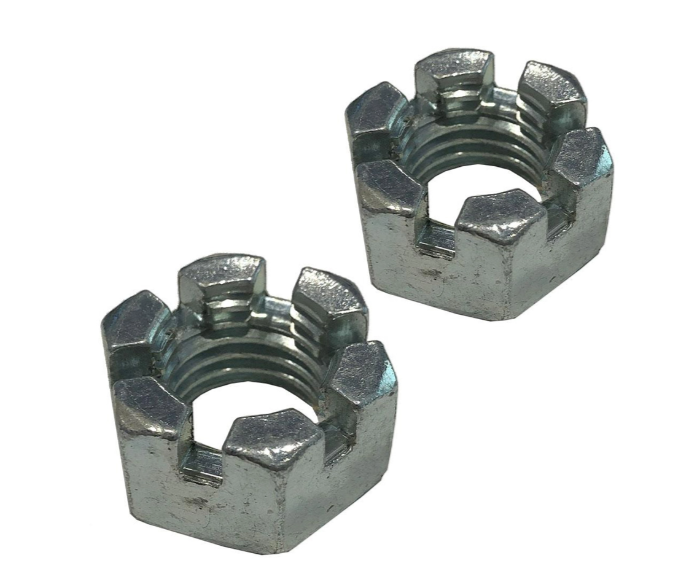
Installing slotted nuts correctly is crucial for ensuring their effectiveness. Here are some best practices to follow:
● Ensure Proper Alignment: Before tightening, make sure the slotted nut is aligned with the bolt or shaft. Misalignment can lead to uneven wear and potential failure.
● Use Guides: Consider using alignment tools or jigs to maintain proper positioning during installation.
Choosing the appropriate cotter pins is vital for a secure fit. Here’s what to consider:
● Material Selection: Use high-quality materials like stainless steel or brass for cotter pins to resist corrosion and wear.
● Size Matters: Ensure the cotter pins fit snugly in the slots of the slotted nut. A loose pin may not provide adequate locking.
Cotter Pin Material | Pros | Cons |
Stainless Steel | Corrosion-resistant | Higher cost |
Brass | Good conductivity | Less strength than steel |
Zinc-Plated Steel | Cost-effective | May corrode over time |
Coatings can significantly enhance the lifespan of slotted nuts. Here are some options:
● Zinc Plating: Provides a protective layer against rust and corrosion.
● Powder Coating: Offers excellent durability and a variety of color options.
Following a structured installation process ensures a secure fit. Here’s a step-by-step guide:
1. Prepare the Surface: Clean the threads and ensure no debris is present.
2. Position the Slotted Nut: Align it correctly on the bolt or shaft.
3. Tighten to Target Torque: Use a torque wrench to achieve the specified torque setting.
4. Insert Cotter Pin: After reaching the target torque, insert the cotter pin through the slot.
5. Secure the Cotter Pin: Bend the ends of the cotter pin to secure it in place.
● Check for Movement: After installation, check if the slotted nut is secure by attempting to move it gently.
● Visual Inspection: Ensure the cotter pin is properly seated and that there are no gaps.
By following these best practices, you can maximize the performance and longevity of slotted nuts in your applications.
A: Slotted nuts are commonly made from materials like carbon steel, stainless steel, and brass. Carbon steel offers strength and durability, while stainless steel provides excellent corrosion resistance. Brass is used for its conductivity and aesthetic appeal.
A: Slotted nuts exhibit strong performance in extreme temperatures and harsh environments. They maintain their locking capabilities and structural integrity, making them suitable for applications in automotive, aerospace, and industrial settings.
A: Yes, slotted nuts can be reused if they show no signs of wear or damage. Inspect for deformation, corrosion, or other issues before reinstallation to ensure reliability.
A: Slotted nuts may not be ideal in applications with limited space or where frequent adjustments are required. They can also be more susceptible to loosening under certain vibration conditions compared to other locking mechanisms.
Slotted nuts are essential in high-risk applications due to their reliability. They provide secure fastening, especially in high-vibration environments. Their benefits include ease of installation and durability.
Choosing the right fastener is crucial for safety and performance. Future developments may include advanced materials and coatings, enhancing their effectiveness further. Slotted nuts will continue to play a vital role in various industries.