
 English


Views: 0 Author: Site Editor Publish Time: 2026-07-28 Origin: Site


Selecting hardware is a critical risk-mitigation exercise for any construction or renovation project. You simply cannot afford to guess when structural integrity is on the line. Anchor failure in solid concrete or masonry leads directly to damaged fixtures. It compromises the entire structural assembly and creates severe safety hazards for occupants. The core challenge lies in matching the exact right hardware to your specific base material. You must understand the compressive strength of the concrete. You also need to analyze the specific type of applied load carefully.
This article provides an evidence-based framework for fastening success. It helps you select a highly reliable wall anchor for concrete fixing safely. We move far beyond basic hardware store generalizations. You will learn to verify load capacities mathematically. You will also uncover vital installation realities drawn from field experience. Ultimately, this comprehensive guide ensures your next mounting project remains entirely secure.
You must evaluate the host material carefully before selecting any fastening hardware. Its compressive strength heavily influences overall anchor performance. Industry professionals measure compressive strength in pounds per square inch (PSI). Poured concrete often ranges from 2500 to over 6000 PSI. This dense material offers exceptional structural strength. It readily supports heavy mechanical expansion forces without cracking. However, brick presents entirely different mechanical challenges. Brick can be relatively solid but is notoriously brittle. Hollow concrete block, commonly known as CMU, lacks deep internal mass. This severely limits standard friction-based holding power.
You need to clarify the hollow space variable early in your planning. A substrate often transitions abruptly during a single installation. Solid sections might safely require standard friction plugs. Hollow sections demand completely different hardware solutions. You need a specialized toggle or an expansion-based hollow wall anchor. This specific hardware flares out widely behind the hidden void. It spreads the heavy load across the inner surface of the block.
Transparency regarding structural assumptions is vital for safety. Never assume older masonry holds standard catalog load metrics. Crumbling mortar degrades holding power incredibly fast. Brick degrades naturally over decades of weather exposure. Standard mechanical expansion might instantly crack these fragile base materials. In these complex instances, you should utilize chemical adhesives. They bypass substrate fragility by bonding chemically. They do this without exerting any outward expansion pressure.
Understanding specific application tiers prevents catastrophic hardware failure. You must categorize anchors meticulously by their duty ratings. Each design serves a highly specialized mechanical purpose.
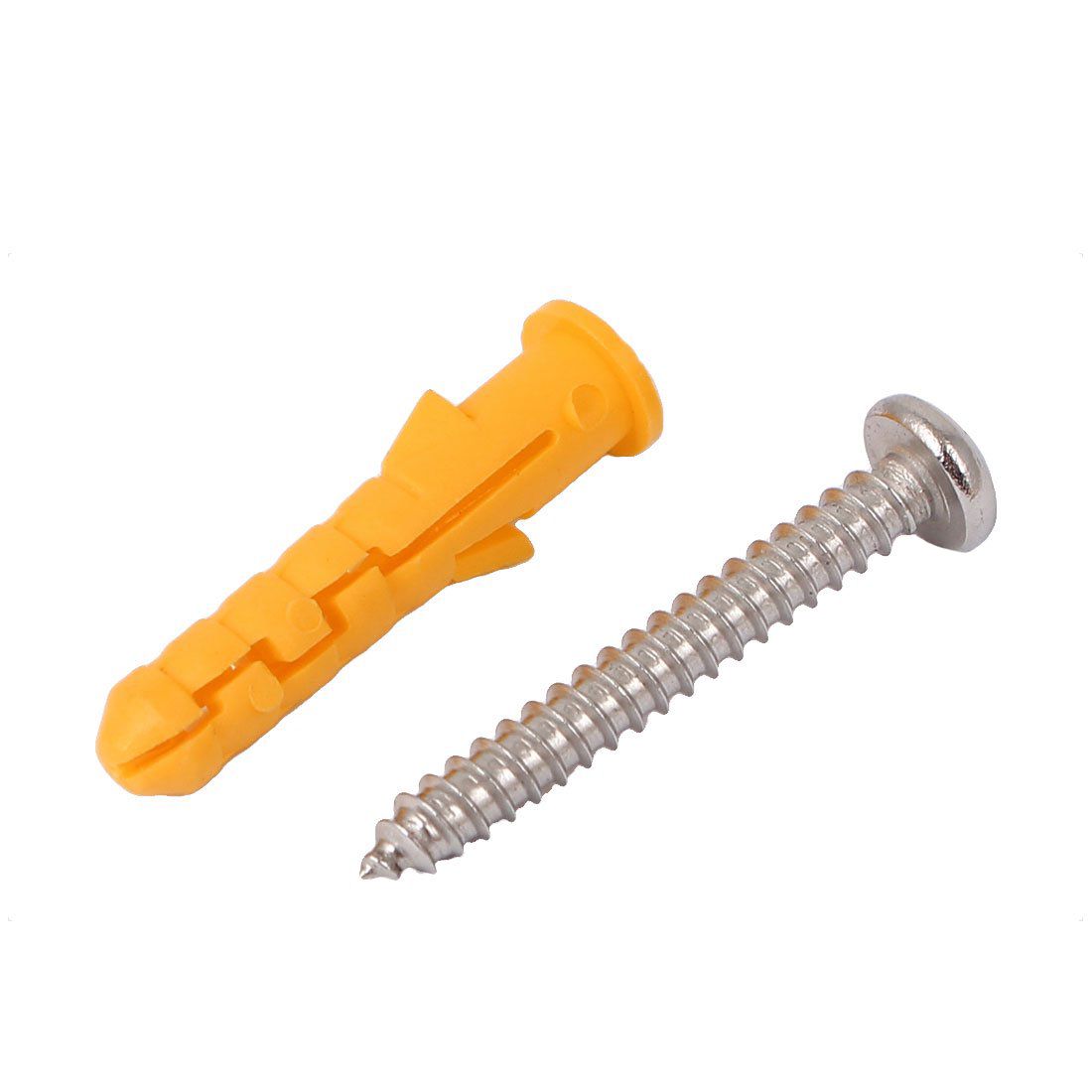
Light-duty applications rely strictly on friction and basic expansion. The standard plastic wall plug fits this category perfectly. Conical anchors also fall securely into this light-duty tier. They work best for static, lightweight objects mounted indoors. You can safely mount electrical junction boxes or lightweight signage. However, they remain highly vulnerable to severe temperature fluctuations. Ambient vibration can also easily shake them loose over time.
Medium to heavy-duty applications demand aggressive mechanical expansion. Wedge anchors and heavy-duty sleeve anchors excel precisely here. They stand as the definitive concrete anchor choices for serious construction. They support heavy, static loads flawlessly. Examples include warehouse pallet racking or heavy industrial machinery. As you tighten the top nut, the bottom collar expands forcefully. It bites deeply and permanently into solid poured concrete.
Masonry and block require far more nuanced solutions. Concrete screws, such as standard Tapcons, cut their own internal threads. Specialized expansion shields expand much more gently than aggressive wedge variants. These shields serve as the optimal masonry fixing anchor. They protect brittle materials prone to cracking under high internal pressure.
Heavy-duty and dynamic loads require specialized chemical or epoxy anchoring. Adhesive anchors offer the ultimate engineered solution for fluctuating dynamic loads. They thrive specifically in high-vibration manufacturing environments. Mechanical expansion creates invisible stress cones inside the concrete. Adhesive anchors completely avoid this internal stress. Therefore, they allow safe installations very close to unsupported concrete edges. They prevent dangerous edge blowouts and surface cracking.
Let us compare these critical hardware categories clearly:
| Anchor Category | Ideal Application | Primary Mechanism | Vibration Resistance |
|---|---|---|---|
| Light-Duty Plastic | Electrical boxes, small interior signs | Friction / Light Expansion | Low |
| Medium/Heavy Mechanical | Racking, structural steel plates | Heavy Mechanical Expansion | Moderate |
| Masonry / Concrete Screws | Brick, hollow block, temporary fixtures | Thread Cutting / Gentle Expansion | Moderate |
| Chemical / Epoxy | Dynamic loads, near-edge mounting | Adhesive Chemical Bond | High |
Load dynamics absolutely dictate fastening safety and long-term viability. You cannot simply rely on maximum weight labels printed on retail packaging. Those numbers often mislead inexperienced installers.
Tension loads measure direct pull-out force. These destructive forces pull perpendicularly away from the wall surface. Imagine a heavily loaded shelf pulling straight away from the drywall. Embedment depth directly dictates maximum tension resistance. The anchor's specific expansion mechanism also plays a major role. Deeper embedment usually yields significantly higher tension strength. In properly engineered systems, the concrete will typically fail before the heavy steel snaps.
Shear loads represent downward gravitational force. These forces push parallel along the wall surface. Gravity constantly pulls the mounted object straight down toward the floor. Shear strength rarely depends on the host concrete itself. Instead, the diameter and steel grade of the hardware dictate capacity. A thicker steel bolt resists shearing far better than a thin, cheap one.
You must clearly understand Safe Working Loads versus ultimate loads. Manufacturers frequently market impressive ultimate failure loads. This high number reflects the exact point of catastrophic physical failure. You must warn your team against using these inflated figures for structural design. Instruct installers to evaluate structural hardware strictly using safety margins. Apply a rigid 4:1 safety factor. This equates to a 25% allowable load limit. If a test anchor fails at exactly 1000 lbs, its safe working limit is only 250 lbs.
Dynamic versus static loading changes the engineering equation entirely. Static loads remain perfectly constant over time. Dynamic loads fluctuate wildly. You must address the inherent risks of vibration or severe wind loads. Heavy motors create sustained micro-vibrations. High wind causes oscillating tension on exterior fixtures. These forces can cause mechanical hardware to slowly back out over time. Properly specified adhesive systems prevent this dangerous loosening completely.
Theoretical load capacities mean absolutely nothing without proper field installation. You must follow strict, unforgiving procedures on the job site. Failure here negates all previous engineering calculations.
Hole preparation involves aggressively managing the dust factor. This step represents the most common installation failure globally. Leaving loose concrete dust in the drilled hole creates a slippery barrier. It severely reduces necessary friction for mechanical hardware. It also completely ruins the chemical bond for adhesive systems. You should recommend a strict "blow-brush-blow" cleaning method. First, use compressed air to blow out the loose dust. Second, use a wire brush to scrub the hole walls vigorously. Finally, blow it out again until the air runs entirely clear.
Drill bit selection requires exceptionally precise tolerances. You must emphasize using strictly ANSI-compliant masonry bits. Standard, cheap bits wear down quickly and drill inaccurately. A hole just 1/16th of an inch too large drastically compromises holding power. The wall anchor will never achieve maximum intended expansion. It will inevitably slip under heavy tension.
Torque specifications actively prevent dangerous over-tightening. Installers often use high-powered impact wrenches blindly to save time. This bad habit introduces the serious risk of "spinning out" the hardware. Exceeding the manufacturer's recommended installation torque crushes the fragile base material. It also strips the internal metal threads. Use a properly calibrated torque wrench for all critical structural installations.
Edge distance and spacing require careful spatial planning. Expanding hardware creates immense internal pressure inside the substrate. Placing them too close to a concrete edge causes immediate structural blowouts. The concrete literally fractures and breaks away from the mass. Strict industry guidelines dictate safe minimum distances. Check specific manufacturer data sheets for minimum edge distance requirements. You also need to maintain minimum spacing between adjacent drilled holes. Overlapping stress cones weaken the entire mounting area severely.
You need a highly structured method to select the right product quickly. Follow these sequential steps for optimal, safe results on every job site.
You can use this simple checklist matrix for quick field reference:
| Substrate Condition | Applied Load Type | Primary Hardware Recommendation |
|---|---|---|
| Solid Poured Concrete | Heavy Static | Mechanical Wedge Anchor |
| Solid Poured Concrete | Heavy Dynamic / Near Edge | Chemical Epoxy Adhesive |
| Hollow Block (CMU) | Medium Static | Heavy Toggle / Sleeve Anchor |
| Brick / Old Masonry | Light to Medium Static | Concrete Screw / Shield |
Selecting the correct hardware is a vital engineering balance. It requires understanding basic structural physics and maintaining rigid implementation discipline. You must analyze your base material thoroughly before buying supplies. You must also calculate both shear and tension dynamics accurately. Prioritizing the correct anchor type prevents severe workplace accidents. Proper, meticulous installation methods easily outweigh cheaper, faster fixes. Rushing the drilling process leads directly to costly long-term failures. Dust removal and precise torque application ensure maximum holding power. Always direct your field team to consult specific manufacturer technical data sheets. Do this for exact load tables before proceeding. Make this verification step mandatory for all critical structural installations. Your strict commitment to proper selection guarantees long-lasting safety and durability.
A: No, you generally cannot. Mechanical anchors require exact, tight tolerances to generate necessary friction. A failed pull-out expands or damages the hole's interior walls. You must patch the old hole completely. Alternatively, evaluate using a chemical adhesive system or a larger diameter anchor if space allows.
A: No, plastic plugs are entirely unsafe for overhead use. They rely purely on lateral friction. They remain highly susceptible to sustained downward tension loads over time. Furthermore, heat or fire causes them to melt rapidly, leading to immediate and catastrophic fixture failure.
A: You must strictly follow the required minimum embedment depth. This concept dictates the absolute shortest distance the hardware must penetrate solid base material. It varies entirely by diameter and manufacturer specifications. Failing to meet this depth severely reduces the safe working load and risks immediate pull-out.
A: Sleeve anchors offer broad substrate versatility. They expand over a much larger surface area, making them safer for fragile block or brick. Wedge anchors provide superior holding power. However, they exert intense, concentrated outward pressure, making them suitable only for solid poured concrete applications.