
 English


Views: 0 Author: Site Editor Publish Time: 2026-06-17 Origin: Site


Ever wondered what holds machines and structures together? Industrial Fasteners are the unsung heroes behind every secure connection. They ensure safety and durability across many industries. In this post, you’ll learn about different types, materials, and best practices for industrial fasteners. We’ll also explore their vital roles in various applications.
Industrial fasteners come in many types, each designed for specific uses and environments. Understanding these types helps you select the right fastener for your project.
Screws fasten parts by digging into materials as they turn. Their heads serve two purposes: stopping once fully driven and housing the drive type used to turn them.
Common head types include:
Binder head: Used in electrical setups, offers space for wire connections.
Truss head: Rounded, often socket-driven, good for low-profile needs.
Fillister head: Higher profile, deeper slot, common in electrical applications.
Flat head: Countersunk for a flush surface.
Hex head: Popular in automotive and machinery.
Oval head: Decorative, slightly raised countersunk.
Pan head: Non-countersunk, decorative, prevents snagging.
Socket head: Flush with surface, strong, needs hex key.
Drive types include slotted, Phillips, hex, and hex socket. Hex drives work well in tight spaces; hex sockets provide strong grip and resist stripping. Slotted heads suit hand-turning but not electric drivers, which may slip and damage surfaces.

Bolts join unthreaded parts and need nuts to tighten, while screws often thread directly into materials. Bolts usually have bigger heads and straight shafts, unlike tapered screws.
Special bolts like plastic eye bolts help route cables. Nuts have internal threads and come in hex shapes for easy gripping. Wing nuts and thumb nuts allow manual tightening, ideal for frequent removals but not structural support. Cap nuts protect exposed threads and improve safety.
Thumb screws have easy-grip heads for hand tightening, perfect for safety covers or panels needing quick access. They come with knurled or wing heads, sometimes with slotted drives for final tightening by a screwdriver.
Knobs offer ribbed designs for secure, comfortable grip. These fasteners are non-structural and suited for applications requiring frequent adjustments.
Panel fasteners attach components to panels via edges or holes. Quarter-turn fasteners allow quick access by turning the fastener a quarter turn, common in access panels or covers. Snap rivets have male and female parts that snap together, providing clean finishes on both sides.
Rivets join materials permanently or semi-permanently. Push-in rivets install by hand or with simple tools, ideal for blind spots. Snap rivets expand inside holes to hold panels securely.
Drive rivets use a mandrel hammered in to flare the rivet inside a hole, great for masonry or architectural features. Solid rivets are very strong and tamper-proof, resisting vibrations, often used in heavy-duty applications.
Threaded rods and studs fasten parts under high tension. Nylon threaded rods resist vibrations, chemicals, and corrosion while being lightweight and non-magnetic. They suit automotive, HVAC, electrical, and marine uses.
The difference between rods and studs often lies in length or installation features like slots. Studs usually have slots for easier installation.
Washers spread the load of fasteners, protecting materials from damage. Flat washers reduce surface pressure and provide spacing. Shoulder washers insulate and reduce vibration, often used between dissimilar metals.
Types include:
Retaining washers: Prevent fastener loss, resist corrosion.
Finishing washers: Decorative, protect surfaces.
Spring washers: Eliminate rattles, maintain tension.
Shoulder washers: Insulate and reduce wear.
Sometimes, fasteners aren't ideal. Suction cups attach non-permanently to smooth surfaces, useful in retail displays.
High-bond tape offers seamless bonding without holes or stress points. It evenly distributes stress, resists temperature cycles, and prevents corrosion between metals. Easy to apply, it saves time and maintains aesthetics.
Choosing the right material for industrial fasteners is crucial. The material affects strength, durability, corrosion resistance, and suitability for specific environments. Let's explore common fastener materials and how their properties impact performance.
Nylon is tough and abrasion-resistant. It has a low friction coefficient and good thermal and chemical resistance. Nylon 6/6 is a stronger variant, absorbing less moisture and handling higher torque. It often replaces metals in lightweight, corrosion-resistant applications.
Polyethylene (PE) offers high impact strength and flexibility. It's crush-resistant, protecting assemblies from damage. PE is ideal where durability and slight flexibility matter.
Polypropylene (PP) is semi-rigid with excellent fatigue resistance. It resists many chemicals, including acids and salts, and handles UV exposure well. PP is common in electronics and pharmaceuticals but becomes brittle in freezing temperatures.
PEEK® is a high-performance plastic maintaining stiffness at elevated temperatures. It resists harsh chemicals and steam, making it popular in healthcare and demanding industrial applications.
Polysulfone (PSU) offers high impact resistance and hydrolytic stability. It withstands hot water, steam sterilization, and detergents, ideal for high-temperature environments.
Acetal (POM) is stiff, hard, and dimensionally stable. It has a low friction coefficient and excellent wear resistance. Acetal suits precise mechanical parts but has moderate heat resistance.
Carbon Steel provides strength and durability. It suits structural applications but can corrode without protective coatings.
Stainless Steel resists corrosion and chemicals well. It’s used where moisture or harsh environments exist.
Brass and Aluminum are lightweight and corrosion-resistant. Brass is often decorative; aluminum is favored when weight-saving is important.
Strength: Metals like carbon steel offer high tensile strength. Nylon and specialty plastics provide sufficient strength for many uses while reducing weight.
Corrosion Resistance: Stainless steel, nylon, and polypropylene resist corrosion. Carbon steel requires coatings.
Thermal Stability: PEEK® and polysulfone maintain performance at high temperatures. Nylon and polypropylene have lower heat resistance.
Electrical Insulation: Plastics like nylon and acetal insulate against electricity, useful in electronics.
When choosing fasteners, consider:
Moisture and Corrosion: Use stainless steel or corrosion-resistant plastics in wet environments.
Chemical Exposure: PEEK® or polysulfone resist harsh chemicals.
Temperature Extremes: Select materials like PEEK® for heat or polypropylene for cold resistance.
Mechanical Loads: Metals suit high-stress joints; plastics fit lighter loads or where electrical insulation is needed.
Example: In marine environments, stainless steel fasteners prevent rust, while nylon fasteners reduce weight and resist saltwater corrosion.
Choosing between coarse and fine threads depends largely on the materials joined and the application's requirements. Coarse threads have fewer threads per inch, making them deeper and stronger in soft materials like aluminum or cast iron. They resist stripping and are quicker to assemble, ideal for general machinery and applications where speed and durability matter.
Fine threads, on the other hand, have more threads per inch, providing a larger tensile stress area. They’re perfect when the internal thread material is stronger than the external, such as steel screws in high-strength alloys. Fine threads offer better fatigue resistance, tighter preload control, and are preferred in precision industries like aerospace and electronics.
Incorrect pairing can cause failures. For example, using fine threads in soft materials risks thread stripping, while coarse threads in hard materials may reduce joint strength and preload accuracy.
Thread manufacturing impacts fastener strength and longevity. Cut threads form by removing material through machining, like lathes or taps. This process interrupts the metal grain flow, creating stress points that lower fatigue life and surface smoothness. Cut threads tend to have rougher surfaces, increasing friction and wear.
Rolled threads, produced by pressing dies against the fastener blank, deform the metal plastically without removing material. This maintains continuous grain flow along the thread, enhancing strength and fatigue resistance. Rolled threads are smoother, reducing friction during installation.
Compared to cut threads, rolled threads can increase fatigue strength by 50–75% and extend fatigue life by 5 to 10 times. They also offer better dimensional consistency, essential for automated assembly.
Thread rolling machines use hardened dies to press threads onto fasteners rapidly and precisely. They operate dry, reducing costs from cutting fluids and tool wear. These machines can produce 100 to 500 parts per minute, far faster than cutting methods.
Benefits include:
Improved thread strength: Continuous grain flow reduces stress concentrations.
Better surface finish: Lower friction during assembly and longer tool life.
High dimensional accuracy: Ensures consistent fit and preload in automated systems.
Cost efficiency: Less waste and faster production lower unit costs.
Thread rolling machines are critical in industries demanding high-quality fasteners, such as automotive and aerospace.
Thread type directly affects how a fastener handles stress and vibration. Fine threads provide higher static and fatigue strength due to the increased tensile stress area and better preload control. This reduces the risk of loosening under cyclic loads.
Rolled threads enhance this further by maintaining metal integrity and reducing micro-cracks at the thread roots, common failure points in cut threads. The smoother surface also reduces wear during tightening and loosening.
In contrast, coarse threads, while easier to assemble and more resistant to stripping in soft materials, generally offer lower fatigue resistance. Cut threads, regardless of pitch, have shorter fatigue lives due to material removal and rough surfaces.
For critical applications, selecting fine, rolled threads maximizes fastener life and joint reliability.
Fasteners mainly serve to clamp parts together by applying preload, not to bear shear or position loads. Clamping load keeps components tightly pressed, ensuring joint stability. Shear loads act perpendicular to the fastener axis and should never be applied to threads, as threads are weaker than the shank. Positioning functions belong to dowel pins or locating features, not fasteners. Misusing fasteners for shear or positioning risks joint failure, misalignment, and wear.

Threads have a smaller diameter and weaker cross-section than the unthreaded shank, making them vulnerable under shear. To avoid this, fastener design must place the shank in the shear plane, not the threaded portion. For example, in double-shear joints, the bolt’s smooth shank passes through the shear planes, protecting threads from shear forces. In sheet metal, press-in bolts with controlled insertion depth ensure threads stay clear of shear zones. Using dowel pins to carry shear loads and fasteners solely for clamping extends joint life and prevents loosening.
Preload is the tensile force generated when tightening a fastener, critical for joint integrity. Under-tightening causes insufficient clamping, leading to fatigue failure, vibration loosening, and leaks. Over-tightening risks yielding or even breaking the fastener, but staying close to the yield strength maximizes joint stability. Proper torque application ensures preload stays within safe limits. Stress-strain curves show that preload close to, but not exceeding, yield strength provides the best performance. Automation with torque-controlled tools or insertion machines helps maintain this balance.
Torque controls preload but varies by friction, thread condition, and lubrication. A simplified formula estimates torque:
Torque (T) ≈ 0.2 × Preload Force (F_i) × Nominal Diameter (d)
Adjustments for lubrication or coatings are necessary. Verification methods include:
Manual: Torque wrenches calibrated to ISO 6789 standards.
Automated: Insertion machines with torque sensors and laser elongation measurement achieve preload accuracy within ±5%.
Press-in machines: Use pressure feedback to verify self-clinching fastener preload indirectly.
Always select standard, off-the-shelf (OTS) fasteners conforming to ISO, ANSI, or DIN standards. Custom fasteners increase lead times and costs. Identification follows global formats:
Thread System | Format Example | Notes |
|---|---|---|
Metric | 8.8-M10×1.5 | Strength class, diameter, pitch |
Imperial ≥1/4" | 3/8-16-Grade 5 | Diameter, threads per inch, grade |
Imperial <1/4" | 10-32-Grade 8 | Screw number, threads per inch |
Using standardized fasteners ensures compatibility, quality, and easier procurement.
Double-shear joints double load capacity by having two shear planes, preferred for high-stress applications like motor mounts. CNC batch drilling and automated fastener installation improve consistency. Edge distance—the space from hole center to material edge—should be at least equal to the major thread diameter (e.g., ≥10 mm for M10 bolts). Too close causes edge tearing; too far adds unnecessary weight. For sheet metal, add clearance for press-in machine heads to prevent interference. Proper edge distance also aligns with fastener length, avoiding excessive protrusion or insufficient engagement.
Industrial fasteners come in many forms, each tailored to meet the demands of specific industries. Understanding these applications helps you choose fasteners that ensure performance, safety, and longevity.
In consumer electronics and appliances, fasteners must be small, reliable, and often non-metallic to avoid electrical interference. Common choices include:
Machine screws with cheese or fillister heads for securing circuit boards.
Barbed push rivets for quick, tool-free assembly.
Heat-resistant snap rivets that withstand temperatures up to 130°C, ideal for devices generating heat.
Cap nuts to cover exposed threads, improving safety and aesthetics.
Flat washers made from nylon or plastic to insulate and protect delicate components.
These fasteners provide secure joins without damaging sensitive electronics and allow for easy disassembly during repairs.
For retail displays and furniture, fasteners must combine strength with a clean appearance and ease of assembly:
Screw cover caps snap over bolt heads, hiding hardware and enhancing the look.
Clinch rivets provide strong, blind fastening, especially for soft materials like wood or plastic.
Knurled thumb screws enable tool-free fastening in tight spaces.
Wing or fly nuts allow quick manual installation and removal, perfect for adjustable furniture.
These fasteners speed up assembly lines and improve product presentation.
Machinery demands fasteners that resist vibration, corrosion, and heavy loads:
Threaded rods and studs made of nylon or metal provide high tension resistance.
Shoulder washers isolate fasteners from conductive parts, reducing wear.
Phillips shoulder screws allow rotation of moving parts without loosening.
Push-in countersunk rivets offer tamper resistance and flush surfaces for safety.
Fasteners here ensure machines run smoothly and withstand harsh conditions.
Automotive applications require fasteners that are lightweight, corrosion-resistant, and able to handle dynamic loads:
Push-in rivets quickly secure bumper components without tools.
Hex head cap screws provide strong mechanical fastening for structural parts.
Quarter-turn panel fasteners simplify access to interior trim panels.
Grommet nuts offer vibration resistance and secure threaded connections in thin materials.
Retaining washers keep screws and bolts in place during assembly.
These fasteners contribute to vehicle durability, safety, and ease of maintenance.
Medical equipment fasteners demand precision, chemical resistance, and sterilization capability:
Push-in rivets that are easy to insert and remove, suitable for plastic panels.
Thumb nuts with knurled grips for quick manual adjustments.
PEEK socket head screws resist high temperatures and chemicals.
Wing-shaped thumb screws provide secure grip and fatigue resistance.
PEEK hex nuts offer electrical insulation and withstand sterilization processes.
These fasteners ensure reliability and safety in critical healthcare environments.
Industrial fastening technology continues to evolve, offering innovative solutions that improve efficiency, reliability, and ease of use. These alternatives often address challenges like assembly speed, serviceability, and substrate compatibility. Let’s explore some of the latest advancements and alternative fastening methods gaining popularity.
High-bond tape provides a strong, seamless bond without drilling holes or using mechanical fasteners. It uses an acrylic foam adhesive core that evenly distributes stress across bonded surfaces. This reduces stress concentrations that typically cause fastener failure or corrosion.
Benefits include:
No damage to substrates: No holes or surface deformation.
Corrosion prevention: Acts as a barrier between dissimilar metals, preventing galvanic corrosion.
Vibration resistance: Absorbs shocks and vibrations, maintaining bond integrity.
Thermal cycling tolerance: Performs well under temperature changes.
Aesthetic finish: Creates clean, flush surfaces free of visible fasteners.
High-bond tape suits decorative panels, electronics enclosures, and lightweight assemblies requiring clean appearances and moisture resistance.
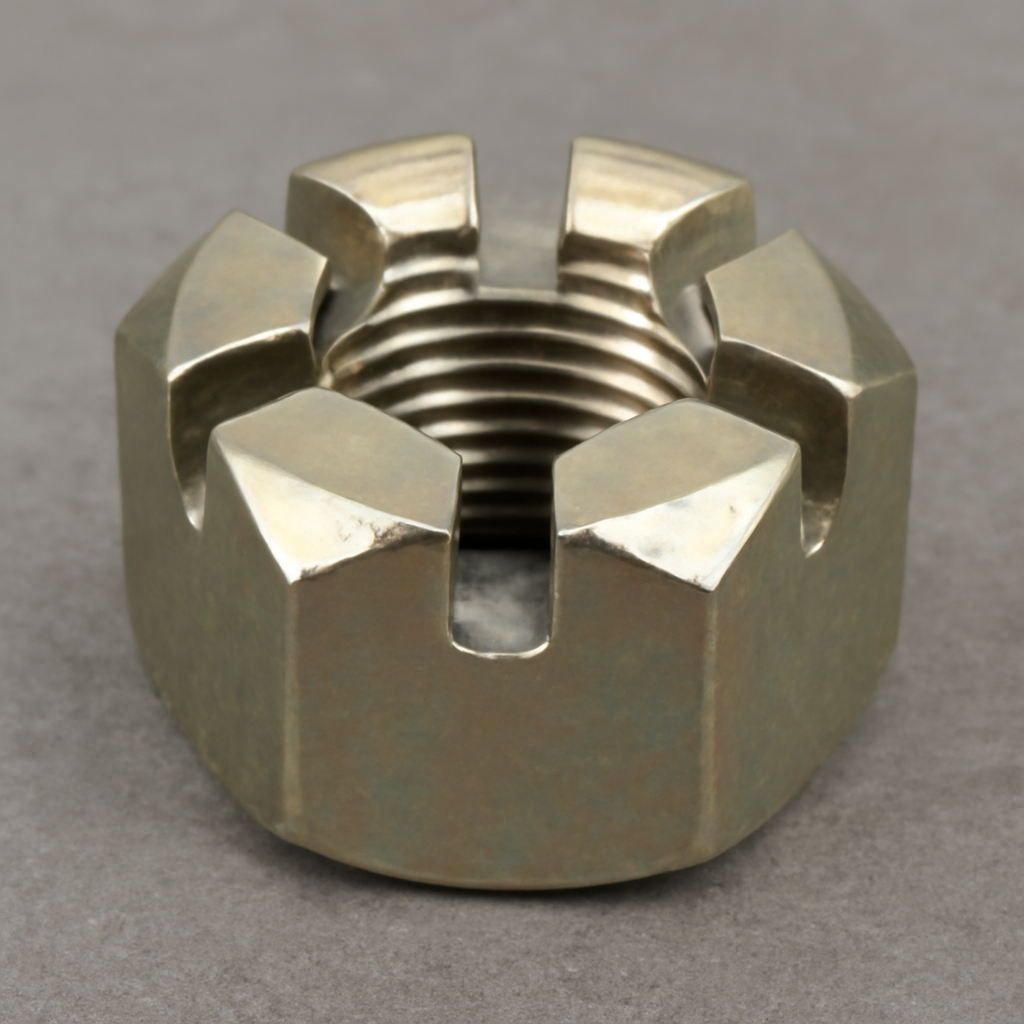
Captive screws and nuts remain attached to panels or components even when loosened. This design prevents fastener loss during maintenance or servicing, reducing downtime and assembly errors.
Features include:
Knurled knob heads: Allow finger-tightening without tools.
Dual-drive heads: Combine slotted and Phillips recesses for flexible tool use.
Press-in or flare-in mounting: Secure fasteners directly into metal or plastic panels.
Durable coatings: Resist corrosion and wear in harsh environments.
Captive fasteners are common in telecom racks, industrial enclosures, and equipment requiring frequent access.
Expansion bolts anchor securely into solid materials like concrete, stone, or masonry. They expand inside drilled holes, creating strong mechanical interlocks that resist pull-out forces.
Key points:
Material: Typically zinc-plated steel with chromate coating for corrosion resistance.
Applications: Mounting heavy equipment, base plates, or enclosures where high pull-out strength is essential.
Installation: Requires pre-drilled holes; expansion occurs during tightening.
Expansion bolts are a reliable solution for heavy-duty fastening in construction and industrial settings.
Automation in fastener installation improves precision, speed, and consistency. Innovations include:
Press-in machines: Install self-clinching fasteners rapidly, ensuring correct depth and alignment.
Insertion machines: Control torque and preload precisely, reducing assembly errors.
Integrated sensors: Monitor torque, angle, and elongation in real time to verify fastener quality.
Robotic automation: Enables high-volume, repeatable fastening in complex assemblies.
These technologies reduce labor costs, improve joint reliability, and support quality assurance in manufacturing.
Industrial fasteners vary widely in type and material, each suited for specific applications and environments. Proper selection and installation ensure joint strength, durability, and safety. Advances like high-bond tape and automation improve fastening efficiency and reliability. www.wf-fastener.com Ningbo Weifeng Fastener Co., Ltd. offers high-quality fasteners designed to meet diverse industrial needs, providing durable, corrosion-resistant solutions that enhance assembly performance and product longevity. Their expertise supports customers in achieving optimal fastening results with innovative products and services.
A: Industrial fasteners are hardware devices used to join materials securely. Common types include screws, bolts and nuts, rivets, threaded rods, washers, and panel fasteners, each designed for specific applications and environments.
A: Choose materials based on strength, corrosion resistance, temperature, and electrical insulation needs. Metals like stainless steel suit harsh environments, while nylon and specialty plastics offer lightweight, corrosion-resistant options.
A: Rolled threads maintain continuous metal grain flow, enhancing strength and fatigue resistance, unlike cut threads which create stress points. This results in longer-lasting, more reliable fasteners.
A: Ensure industrial fasteners carry clamping loads, not shear or positioning loads. Place the unthreaded shank in shear planes and use dowel pins for positioning to prevent thread damage and joint failure.
A: Innovations like high-bond tape, captive screws, and automated insertion machines enhance assembly speed, serviceability, and joint reliability while reducing damage and fastener loss.