
 English


Views: 0 Author: Site Editor Publish Time: 2026-08-17 Origin: Site


Self-drilling fasteners eliminate the need for pre-drilling, but selecting the wrong point size or gauge compromises structural integrity and halts project momentum. Engineers and contractors frequently confuse screw gauge with drill point size on the job site. Specifying a point size with insufficient flute length for the substrate thickness leads to drill-out failure, snapped heads, and compromised shear strength. You end up with wasted materials and stalled crews.
While "Tek" originated as a specific brand name, it has become the industry-standard genericized term for self-drilling screws. This guide breaks down the technical specifications of tek screw sizes—specifically comparing Tek 1 through Tek 5 point types—to provide a reliable framework for matching fastener geometry to material thickness and load requirements.
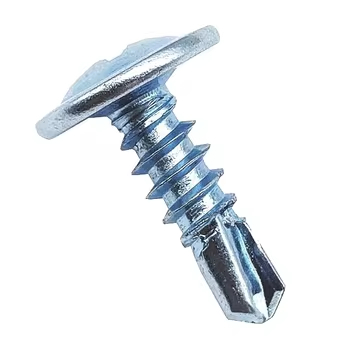
Point Size Dictates Drilling Capacity: The Tek number (1 through 5) correlates directly to the length of the drill flute; the flute must be longer than the total thickness of the materials being fastened to prevent binding.
Gauge vs. Point Disconnect: A larger screw diameter (gauge) does not automatically mean a higher drilling capacity. A #12 screw can feature a Tek 2 or a Tek 5 point, serving entirely different structural applications.
Material Thickness Thresholds: Tek 2 is optimized for thin sheet metal (up to ~0.100"), Tek 3 handles medium-gauge metals (up to ~0.210"), while Tek 4 and 5 are engineered for heavy structural steel (up to 0.500").
Failure Mitigation: Proper sizing calculations must account for the unthreaded pilot section of the screw to ensure the threads engage only after the drilling phase is complete.
Table of Contents
Procurement teams and field engineers regularly encounter ambiguous fastener specifications. A callout for a "#12-24 x 1-1/4 Tek 3" screw contains four distinct variables. Misinterpreting any single variable leads to incorrect ordering, failed inspections, and on-site structural defects. Understanding the distinct components of this nomenclature prevents wasted labor hours and ensures the joint performs under engineered loads.
The first number in the sequence represents the diameter, or gauge, of the screw. Common structural sizes range from #8 to #14. Specialized applications utilize gauges spanning from as small as #6 up to 3/8-inch. Gauge determines the shear and tensile strength of the fastener. It does not dictate drilling capability. A thicker screw shaft resists higher lateral shear forces and provides greater pull-out resistance in the substrate.
Standard Screw Gauge Decimal Equivalents
Screw Gauge | Decimal Equivalent (Inches) | Typical Application Load |
|---|---|---|
#8 | 0.164" | Light-duty sheet metal, trim |
#10 | 0.190" | Standard HVAC, light framing |
#12 | 0.216" | Medium commercial framing |
#14 (1/4") | 0.242" - 0.250" | Heavy structural connections |
5/16" | 0.312" | Industrial steel plating |
The second number indicates the thread pitch, measured in Threads Per Inch (TPI). Fasteners feature either fine or coarse threads. Fine threads, often designated as Type S, provide superior grip in thicker metals. They require less torque to drive through heavy steel. Coarse threads, such as Types A or AB, displace less material and bite aggressively into thin sheet metal. TPI and thread-cutting profiles directly impact pull-out resistance. Harder substrates require finer threads to maximize engagement without stripping the host material.
Fastener length is measured from the underside of the head to the very tip of the drill point. Standard length categories simplify selection. Short screws range from 3/8-inch to 5/8-inch. Medium screws span 3/4-inch to 2 inches. Long screws exceed 2-1/2 inches. The total length does not equal the usable length. The "grip range" defines the actual fastening capacity. You calculate grip range by taking the total length and subtracting both the drill point and the unthreaded pilot section.
Self-drilling fasteners fall into five primary point classifications. The point number dictates the length of the drilling flute. This flute length establishes the maximum drillable material thickness. Matching the point size to the substrate is the most critical step in fastener selection. If the flute fills with metal chips before the hole is complete, the screw seizes.
Tek 1 and Tek 2 points handle thin materials. They offer a maximum drilling capacity typically up to 0.100 inches. This equates to roughly 12-gauge steel. The short drill flute quickly penetrates thin metal without requiring excessive forward pressure. The point geometry features a wider angle, allowing it to bite into sheet metal without walking across the surface.
Contractors rely on these points for HVAC ductwork installation. They secure thin metal roofing panels effectively. Framing crews use them to attach plywood to thin metal studs. Common industry sizes include #8 × 1/2-inch and #10 × 3/4-inch. These compact fasteners deliver rapid installation speeds in light-duty scenarios where heavy chip evacuation is unnecessary.
Performance limitations become obvious when misapplied. Using a Tek 2 on thicker steel causes immediate failure. The threads engage the metal before the point finishes drilling. The screw attempts to pull itself forward faster than the point can remove material. This thread binding snaps the fastener head off entirely, leaving the shaft stuck in the steel.
Tek 3 represents the baseline for commercial construction. It provides a drilling capacity up to 0.210 inches. This handles roughly 3/16-inch thick steel. The flute length accommodates standard structural framing components, allowing sufficient space for metal chips to travel up and out of the hole during installation.
Use cases span across commercial job sites. Crews use Tek 3 screws to attach metal panels to structural purlins. They secure heavy-gauge metal framing track and studs. The point geometry handles multi-layer steel connections efficiently, easily drilling through two layers of 16-gauge steel without binding.
Tek 3 remains the most versatile and commonly stocked point size. It balances drilling speed with structural holding power. It prevents the thread binding issues seen with Tek 2 points on medium steel. It avoids the slow drilling speeds associated with oversized points on thinner materials. When in doubt on a commercial framing site, Tek 3 is the standard default.
Tek 4 and Tek 5 fasteners tackle heavy structural steel. Tek 4 provides a drilling capacity up to 0.312 inches, or 5/16-inch steel. Tek 5 extends that capacity up to 0.500 inches, or 1/2-inch steel. These fasteners replace the need for pre-drilling, tapping, and bolting in heavy metal applications. They save massive amounts of labor on industrial sites.
The design features an extended flute length. Deep holes require efficient material removal. The long flute evacuates metal chips rapidly. This prevents the drill point from clogging and overheating. These specialized points improve drilling speed in thick steel. They reduce material splitting and provide enhanced grip by ensuring the hole is perfectly sized for the trailing threads.
Implementation requires specific tooling and technique. Tek 4 and 5 require higher torque and lower RPMs. Running a drill at high speeds generates excessive friction. This heat burns out the drill point before penetration is complete, turning the tip blue and dulling the cutting edges. Installers must maintain steady pressure and restrict drill speeds to 1500 RPM to utilize these heavy-duty points effectively.

Selecting the right length is as critical as choosing the correct point size. Fastener length dictates the structural integrity of the joint. If the unthreaded pilot section is too short, the threads will engage the top material while the point is still drilling the bottom material. This causes jacking, where the two materials are forced apart, compromising the connection.
The Flute Length Rule governs proper selection. The length of the drill flute must strictly exceed the combined thickness of all materials being joined. You must also account for any air gaps between the materials. If the flute is shorter than the total thickness, the threads will bind in the substrate. The drill point must completely breach the back side of the bottom material before the first thread catches the top material.
Thread engagement determines the final pull-out resistance. Once the drilling phase concludes, the threads must fully engage the bottom substrate. Calculate the necessary threaded length by ensuring at least three full threads extend past the back of the bottom material. This guarantees maximum holding power and prevents premature pull-out under heavy loads. For example, attaching 2-inch rigid insulation to a 1/4-inch steel beam requires a fastener long enough to clear the insulation, drill the steel, and expose three threads.
Field failures stem from guesswork. Implementing a structured evaluation framework ensures you specify the correct tek screw sizes for every application. Follow these steps to match fastener geometry to project requirements.
Step 1: Determine Total Material Thickness. Measure the exact thickness of the fixture being attached. Measure the thickness of the base substrate. Combine these numbers. Match this total directly to the maximum drilling capacity of the Tek point (1 through 5). Do not guess material thickness. Use calipers if necessary to confirm the exact gauge of the steel.
Step 2: Assess Load Requirements. Evaluate whether the joint faces shear or tensile loads. Shear loads push across the fastener. Tensile loads pull the fastener straight out. Select the appropriate gauge based on these engineering load requirements. Use #8 or #10 for light loads. Specify #12, #14, or up to 3/8-inch for heavy structural demands.
Step 3: Select Head Style and Drive. Head style impacts both clearance and torque transfer. Hex washer heads handle high torque and are ideal for metal-to-metal connections. Pan heads offer a lower profile for applications requiring clearance. Flat heads suit countersunk applications where a flush finish is mandatory.
Fastener Head Style Applications
Head Style | Drive Type | Primary Field Application |
|---|---|---|
Hex Washer Head | Hex Socket | High-torque metal-to-metal framing |
Pan Head | Phillips / Square | Low-profile clips, brackets, HVAC |
Flat Head | Phillips / Torx | Countersunk wood-to-metal applications |
Wafer Head | Phillips | Lath, plywood, large surface area clamping |
Step 4: Environmental Compliance. Factor in material composition and coatings. Standard indoor applications utilize zinc-plated fasteners. Exterior environments require 410 stainless steel or specialized anti-corrosion coatings like Ruspert or Climaseal. Dissimilar metals demand bi-metal fasteners to prevent rapid degradation. Bi-metal screws feature a carbon steel drill point welded to a stainless steel shaft, offering both drilling power and corrosion resistance.
Even with the correct fastener specified, installation errors cause joint failure. Understanding common risks allows crews to adjust techniques and prevent costly rework on the job site.
Risk 1: Point Burn-Out. Running the drill at too high an RPM melts the drill point. This occurs frequently with Tek 4 and 5 fasteners in heavy steel. High speeds generate friction rather than cutting action. Mitigation requires specifying correct RPM limits. Use lower RPMs (1500 to 2000 max) and higher physical pressure for thick substrates. Let the drill point do the cutting.
Risk 2: Jacking and Thread Binding. This happens when the flute is too short for the material thickness. The threads engage early, pushing the top material away from the base. Mitigation requires strict adherence to maximum drilling capacity charts. Always verify the flute length exceeds the total material thickness. If jacking occurs, switch to a fastener with a longer unthreaded pilot section or a higher Tek number.
Risk 3: Galvanic Corrosion. Using incompatible fastener materials with the substrate destroys the joint over time. Installing standard zinc screws in aluminum panels creates a galvanic reaction, rapidly rusting the fastener. Mitigation involves specifying bi-metal Tek screws. You can also use fasteners with appropriate barrier coatings or neoprene washers to isolate the dissimilar metals.
Tek Point Drilling Capacity Summary
Tek Point Size | Max Drilling Capacity (Inches) | Typical Material Application | Common Use Cases |
|---|---|---|---|
Tek 1 & 2 | Up to 0.100" | Thin Sheet Metal (12-gauge) | HVAC, metal roofing, light framing |
Tek 3 | Up to 0.210" | Medium Steel (3/16") | Commercial framing, purlin attachments |
Tek 4 | Up to 0.312" | Heavy Steel (5/16") | Structural steel connections |
Tek 5 | Up to 0.500" | Thick Structural Steel (1/2") | Heavy I-beams, thick metal plates |
Audit your current fastener inventory to ensure flute lengths exceed your maximum combined material thicknesses for upcoming projects.
Update your procurement specifications to explicitly state both the required gauge and the specific Tek point number to prevent supplier substitutions.
Calibrate job site drill speeds, restricting heavy structural steel applications to 1500 RPM to prevent point burn-out on Tek 4 and 5 screws.
Request certified engineering load tables from your supplier to verify shear and tensile capacities for your specific substrate before installation.
For projects that require reliable self-drilling screws and other fastening solutions, working with an experienced fastener supplier can also help ensure the correct combination of dimensions, materials, coatings, and applicable standards. Ningbo Weifeng Fastener Co., Ltd., established in 2003, has more than 20 years of industry experience and specializes in developing, manufacturing, trading, and servicing screws, bolts, nuts, anchors, tools, and other fasteners, with products supplied according to standards including GB, DIN, JIS, and ANSI for customers in more than 100 countries.
A: The #12 refers to the thread diameter, or gauge, of the screw. It determines the fastener's shear and tensile strength. Tek 3 refers to the drill point size. It dictates the length of the drilling flute and the maximum material thickness the screw can penetrate.
A: While a Tek 5 will easily drill through thin sheet metal, it is not recommended. The long unthreaded pilot section required for the Tek 5 point prevents the threads from engaging tightly on thin materials, resulting in a loose connection and poor clamping force.
A: The second number indicates the Threads Per Inch (TPI). In a 12-24 screw, the fastener has 24 threads per inch along its shaft. Higher TPI indicates a finer thread, which is typically used for thicker, harder metals to maximize grip.
A: Calculate the required length by adding the thickness of the top material, the thickness of the bottom substrate, the length of the drill point, and enough length for at least three exposed threads to extend past the back of the substrate.
A: Heads snap due to thread binding. This occurs when the drill point is too short for the material thickness. The threads engage the metal before the point finishes drilling, causing the screw to lock up and snap under the torque of the drill.
A: No. Tek screws are self-drilling fasteners equipped with a drill bit point, eliminating the need for a pilot hole. Self-tapping screws have a sharp point and cutting threads, but they require a pre-drilled pilot hole to function properly.