
 English


Views: 0 Author: Site Editor Publish Time: 2026-09-28 Origin: Site


Fastener misidentification carries severe operational costs on the job site. Stripped threads, snapped heads, and compromised structural integrity often stem from a single error during procurement or installation. The industry persistently confuses self-drilling and self-tapping screws, with professionals frequently using the terms interchangeably. This inaccuracy leads to specifying the wrong fastener, which increases labor time, accelerates tool wear, and creates critical vulnerabilities in load-bearing applications. You need to specify the correct fastener based on material thickness, installation speed requirements, and shear strength criteria. Understanding the fundamental differences ensures secure joints and efficient assembly across commercial builds. We will evaluate how to match the exact fastener profile to your specific substrate so your crews stop wasting time extracting broken screws and repairing damaged metal framing.
Self-Tapping Screws work by displacing or cutting material to create mating threads. They secure themselves within a substrate by forming a precise thread path as they are driven downward. We categorize these fasteners into two primary mechanisms based on how they interact with the base material. Thread-forming screws displace material without creating chips. They push the substrate outward, compressing the material tightly against the screw shank. You use thread-forming variants primarily in plastics, aluminum, and soft metals where maintaining material integrity matters. Thread-cutting screws feature a distinct relief edge or flute cut directly into the threads. This edge acts as a miniature router bit to remove material chips as the screw drives into the hole. Thread-cutting designs are ideal for harder substrates like cast iron or thick aluminum where material displacement would cause the base material to crack, bulge, or shatter under pressure.
A pilot hole is strictly mandatory for most self-tapping applications in metal. The physics dictate this requirement. The tapered point cannot bore through solid steel on its own. Without a pilot hole, the fastener binds against the surface. The screw will snap under rotational torque from your impact driver. Success depends entirely on accurate pilot hole sizing. If the hole is too small, the screw fractures due to excessive driving torque. The shank simply cannot handle the friction generated against the tight metal walls. If the hole is too large, you get inadequate thread engagement. The threads barely scratch the surface of the hole, leading directly to pull-out failure under structural loads. You must match the drill bit to the minor diameter of the screw. For example, a #10 screw typically requires a #25 or #20 drill bit depending on the exact gauge of the sheet metal. Getting this measurement wrong compromises the entire connection.
A self-drilling screw features a highly specialized anatomy designed for heavy-duty applications. The defining characteristic is the fluted drill tip. The industry commonly refers to these as TEK points. Manufacturers grade these points on a scale from #1 to #5. The number corresponds directly to the drilling capacity and flute length. A #1 point handles thin gauge metal like HVAC ductwork up to 0.090 inches thick. A #3 point handles standard metal studs up to 0.210 inches. A #5 point penetrates heavy structural steel up to half an inch thick. The length of the drill flute determines the maximum material thickness. The flute must completely clear the material before the first thread engages. If threads engage early while the tip is still drilling, the fastener binds. The threads try to pull the screw forward faster than the tip can drill, causing the head to snap off instantly.
These fasteners execute a single-operation process. They drill the hole, tap the internal thread, and secure the joint simultaneously. This eliminates the need for external drill bits and secondary operations on the job site. The process requires strict metallurgical properties. The fastener must consist of case-hardened steel. The drill point must remain harder than the base metal throughout the entire drilling cycle. If the substrate is harder than the screw, the point dulls instantly and just spins on the surface. The case hardening allows the tip to penetrate base metals without deforming. Meanwhile, the core of the screw remains ductile. This softer core absorbs shear loads and prevents the fastener from becoming brittle and snapping under building movement, wind loads, or thermal expansion.
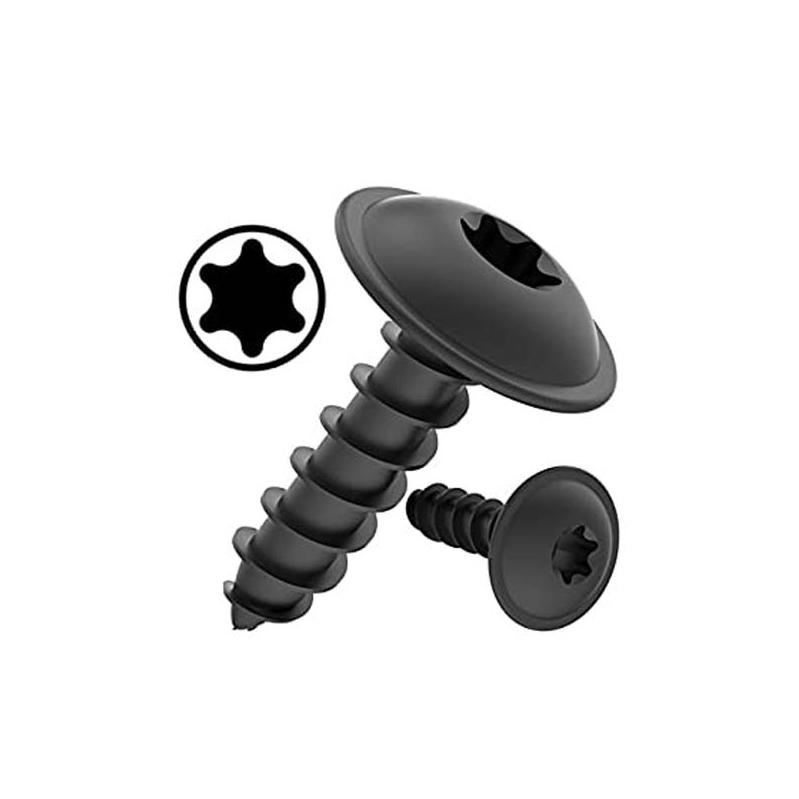
When evaluating self drilling vs self tapping screws, the point geometry reveals the intended function. A self-tapping screw features a sharp, tapered point. It resembles a traditional wood screw tip with an angle usually between 25 and 30 degrees. It relies on a pre-existing void to begin thread engagement. The sharp point helps align the screw inside the pilot hole before the threads bite. A self-drilling screw features flat, fluted cutting edges. It looks exactly like a miniature drill bit welded to the end of a threaded shank, typically featuring a 118-degree drill point angle. The chisel edge at the tip initiates the cut. The flutes channel metal shavings away from the hole to prevent binding. This geometry defines their distinct operational capabilities on the job site.
Thread pitch differs significantly based on the intended material. Self-drilling screws designed for thick steel utilize finer threads. Fine threads maximize the number of contact points within a shallow hole. This increases the overall holding power in heavy metals. For instance, a 1/4-20 screw provides 20 threads per inch, offering massive grip in a 1/4-inch steel plate. Self-tapping screws often feature coarser threads. Coarse threads bite aggressively into softer materials like wood, plastic, or thin aluminum. The wider spacing prevents the substrate from crumbling or stripping out during installation. You must match the thread pitch to the density of your base material to ensure the joint holds under tension.
Self-drilling screws often provide superior stability in metal joints. The integrated drill point creates a perfectly sized hole every single time. This hole precisely matches its own specific thread profile. This exact match maximizes thread engagement. It reduces the human error associated with manually sizing pilot holes. When workers drill pilot holes for self-tapping screws, they often use worn bits. A worn bit creates an undersized hole, leading to snapped screws. A wobbling bit creates an oversized hole, leading to stripped threads. Self-drilling fasteners eliminate this variable entirely, ensuring consistent holding power across thousands of connections on a commercial build.
You must evaluate the conceptual trade-offs between these fasteners. Self-drilling fasteners carry a higher upfront unit cost. The complex manufacturing of the drill point increases production expenses. However, they deliver massive labor savings on large-scale projects. Eliminating the pre-drilling stage cuts installation time in half. A worker can drive a self-drilling screw in 3 to 5 seconds. Pre-drilling and tapping takes 10 to 15 seconds per hole. Workers complete assemblies faster with fewer tool changes. They don't have to carry a drill in one hand and an impact driver in the other. Self-tapping screws cost less per unit. They require more labor time due to the pilot hole requirement. You must calculate the total installed cost, factoring in hourly wages and project timelines, rather than just looking at the price per box.
| Feature | Self-Tapping Screws | Self-Drilling Screws |
|---|---|---|
| Point Design | Sharp, tapered tip (25-30 degree angle) | Fluted drill bit tip (118 degree angle) |
| Pilot Hole | Strictly required in metal | Not required |
| Primary Substrates | Wood, plastic, thin sheet metal | Heavy metal, structural steel, roofing |
| Installation Speed | Slower (two-step process) | Faster (single-step process) |
| Primary Risk | Incorrect pilot hole sizing | Drill point burnout from high RPM |
Fastener performance varies wildly in thin-gauge environments. Self-tapping screws often excel in HVAC ductwork and thin sheet metal, specifically 22-gauge and 24-gauge steel. They provide tighter thread engagement in thin substrates. The sharp point easily finds pre-punched holes in ductwork flanges. Self-drilling screws carry a risk of over-drilling in thin metals. The aggressive drill point can strip the thin material before the threads fully seat. The drill tip essentially acts like a hole saw if you push too hard. If you use self-drilling screws here, you must use a #1 or #2 TEK point. You must also use torque-limiting drivers to prevent stripping the sheet metal the moment the head makes contact.
Self-drilling screws are generally unnecessary in non-metal applications. They can actually be highly destructive in wood, OSB, plywood, or plastics. The fluted drill point removes too much material. This creates a void that reduces the holding power of the threads. The screw will just spin in the hole without grabbing the material. Self-tapping variants remain the industry standard here. The sharp point displaces the wood fibers rather than cutting them away. This displacement creates a tight, high-friction grip against the screw shank. Always specify self-tapping fasteners for softer, non-metallic substrates to maintain the structural integrity of the base material.
Heavy metal framing demands specific fastener capabilities. You must use self-drilling screws for penetrating structural steel, red iron, and C-channel. The steel thickness dictates the required point size. TEK #3 points handle standard metal studs and track. TEK #4 and #5 points bore through structural steel beams up to 1/2-inch thick. A self-tapping screw cannot function in this environment. Attempting to drill and tap heavy steel manually is highly inefficient and burns through drill bits rapidly. The integrated drill point is an absolute necessity for commercial steel framing, allowing crews to secure clips and brackets directly to I-beams without dragging magnetic drill presses around the site.
Mixed-material joints present unique fastening challenges. Fastening wood headers or plywood trailer decking to a metal frame requires specialty self-drilling screws. These fasteners feature reamer wings located just above the drill point. The wings bore a clearance hole through the wood. This prevents the threads from engaging the wood. When the drill point hits the metal, the wings break off upon impact. The threads then tap into the metal substrate. This prevents "jacking," where the wood pushes away from the metal before the screw seats. Without reamer wings, the threads would grab the wood and the metal simultaneously, pushing the two materials apart and creating a loose joint.
Evaluating joint integrity requires a strict framework. You must match the fastener tensile and shear strength to the project requirements. Self-drilling screws are often specifically heat-treated. This treatment yields higher shear capacities in metal applications. The case hardening allows the screw to withstand heavy lateral loads from wind or building settling. Self-tapping screws offer different ductility profiles depending on their grade. You must review the manufacturer load tables. Ensure the fastener can handle the expected wind uplift on a roof or dead loads on a wall assembly. Never guess on structural capacities. Always verify the pull-out and pull-over values provided by the engineering data.
Fastener choice heavily impacts manufacturing lines and large-scale projects. Eliminating the pilot hole step transforms assembly speed. You must factor in tool wear and battery life. Self-drilling screws require sustained high RPM to penetrate metal. This drains power tool batteries faster and puts more strain on the motor. However, it reduces operator fatigue by eliminating the push-pull of changing drill bits or swapping tools. High-volume roofing projects rely entirely on self-drilling fasteners. The labor savings easily justify the power consumption and unit cost. A crew can drive thousands of self-drilling screws in the time it takes to pre-drill and tap a few hundred holes.
Professional installations must adhere to established engineering standards. You must reference standard evaluation lenses for fastener performance. ASTM C1513 and SAE specifications dictate the required metallurgical properties for steel framing screws. These standards also govern plating thickness and corrosion resistance. Ensure your selected fasteners meet the specific building code requirements for your region. Structural engineers will reject non-compliant fasteners during inspections, forcing costly rework. Always verify the manufacturer's testing certifications before mass procurement. Look for ICC-ES evaluation reports to confirm the fasteners have been independently tested for the specific load conditions of your project.
Stripping threads in thin metals is a severe implementation risk. High-RPM impact drivers easily overpower thin sheet metal. Once the thread strips, the joint loses all holding power and becomes a liability. You must implement strict mitigation tactics. Use torque-limiting clutches on your power tools instead of standard impact drivers. Dial the clutch down to the minimum required setting to seat the head. Select the correct thread pitch for the material thickness. Finer threads strip less easily in metal than coarse threads because more threads engage the thin material. Train operators to stop driving the moment the head seats against the substrate.
Drill point burnout is a common failure mode on steel framing jobs. The screw tip melts or dulls before penetrating the metal. This occurs when friction generates excessive heat. The heat destroys the case hardening of the drill point, turning the steel soft. You mitigate this by matching the TEK point number to the metal thickness. You must also control the tool RPM. Pushing too hard at maximum speed generates destructive heat. Most TEK 5 screws require a maximum of 1500 RPM, not the 2500 RPM output of a standard impact driver. Apply steady pressure at a moderate RPM. Let the cutting edge do the work. If you see smoke or the tip turns blue, you are running the tool too fast.
Dissimilar metals create severe environmental risks. Driving a stainless steel screw into an aluminum panel triggers galvanic corrosion. The less noble metal rapidly degrades in the presence of moisture, destroying the connection. You must outline mitigation strategies through appropriate coatings. Select fasteners with specialized barrier coatings to isolate the metals. Zinc plating offers basic indoor protection for dry environments. Ceramic or ruspert coatings provide superior exterior resistance against rain and salt spray. Always match the fastener material and coating to the surrounding substrate and environmental exposure. Use 410 stainless steel for high-corrosion environments, but ensure it is properly coated if contacting aluminum.
The choice between these two fastener types hinges entirely on material hardness, substrate thickness, and operational capacity. You must evaluate your specific assembly process before procurement. Choose self-tapping screws for wood, plastics, and thin sheet metal. They are also ideal when precise pilot holes are already integrated into your manufacturing process. Choose self-drilling screws for metal-to-metal fastening, structural steel, and roofing. They dominate any scenario where eliminating the pre-drilling step yields significant labor savings.
A: You can only do this in very thin, soft sheet metal. Generally, a pilot hole is strictly required. Without a pilot hole, the screw tip wanders, binds, and ultimately snaps under torque. The pilot hole ensures proper tapping and prevents fastener damage.
A: TEK is a brand name that has become synonymous with self-drilling screws. They feature an integrated drill-bit point. While they do tap their own threads after drilling the hole, their defining feature is the self-drilling tip.
A: Strength depends on the material grade and heat treatment, not just the tip design. However, self-drilling screws are often case-hardened for metal penetration. This specific heat treatment generally provides high shear strength and excellent joint stability in metal framing.
A: Yes, they can penetrate thick structural steel. You must select the correct TEK point size. A #4 or #5 TEK point features a longer flute designed specifically to bore through heavy steel gauges up to 1/2-inch thick.
A: Yes, they work exceptionally well in wood. They are often preferred over self-drilling screws. Self-drilling points clear out too much material, which reduces holding power. Self-tapping points displace the wood fibers, creating a tight, secure grip.
A: The general rule of thumb is to match the pilot hole to the minor diameter of the screw. This is the root diameter inside the threads. This sizing allows the threads to cut into the substrate material without binding or snapping the shank.