
 English


Views: 0 Author: Site Editor Publish Time: 2026-09-28 Origin: Site


Fastener failure during metal-to-metal installation is rarely a defect of the screw itself. It is almost always a miscalculation of drill point capacity relative to base material thickness. Specifying the incorrect fastener leads to point burn-out, stripped threads, snapped heads, and compromised structural integrity. Engineers and procurement teams must match the exact fastener specifications to the physical realities of the steel framework. You cannot guess these parameters on the job site.
We detail maximum self drilling screw steel thickness capacities by point size, critical installation metrics, and compliance evaluation frameworks to ensure secure, code-compliant fastening. Relying on visual estimates instead of hard data guarantees failure when the structural load shifts.
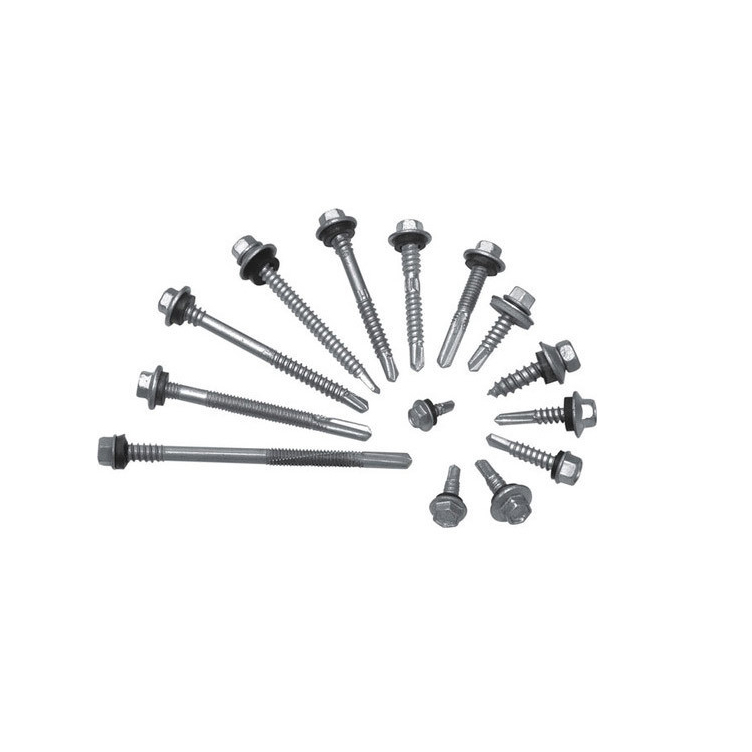
Understanding fastener mechanics starts with the physical anatomy of the drill point. The cutting edge acts as a miniature drill bit. It initiates the hole by shearing away the base metal. The relief angle behind the cutting edge determines how aggressively the screw bites into the steel. The flute is the recessed channel running up the side of the point. It provides an escape route for metal shavings. The pilot section is the unthreaded portion immediately following the flute. The threaded shank then follows to tap and secure the connection.
Each zone performs a distinct mechanical function. The cutting edge must maintain sharpness under extreme friction. If the chisel edge at the very tip fails to bite immediately, it rubs against the steel. This rubbing generates heat and work-hardens the base material. Once the steel work-hardens, penetration becomes nearly impossible. The pilot section ensures the hole is perfectly cylindrical before tapping begins. The threaded shank dictates the final pull-out resistance. Failure in any single zone compromises the entire connection.
The flute channels displaced metal away from the cutting zone. As the cutting edge shears the steel, it creates swarf. This swarf expands in volume as it leaves the cut. The flute acts as a critical evacuation pathway. Without this pathway, metal chips accumulate rapidly. They pack tightly against the cutting edge and generate immense friction. You can often hear the pitch of the drill motor change when a flute begins to pack with chips.
Binding and snapping occur if the flute embeds in the material before the hole is fully bored. If the base material is thicker than the flute length, the flute fills completely. The swarf has nowhere to go. The drill point seizes inside the steel. Rotational force continues from the drill motor. This torsional stress exceeds the fastener's shear capacity. The head snaps off entirely, leaving the shank permanently embedded in the steel.
Thread engagement timing is a strict engineering rule. The drilling process must be 100% complete before the first thread engages the base material. The cutting edge advances through steel much slower than the threads advance. If threads catch the metal while the tip is still drilling, the fastener pulls itself apart.
This phenomenon is known as thread jacking. The threads attempt to pull the screw forward at a specific pitch rate. The drill tip resists this forward motion because it has not finished removing material. The resulting tension stretches the fastener beyond its yield strength. The screw will either snap in half or strip the newly formed threads out of the base metal. Proper flute length prevents this by delaying thread engagement until the tip clears the back side of the steel.
Tek 2 fasteners handle light-duty metal applications. The maximum steel thickness capacity is up to 0.100 inches. This roughly equates to 12-gauge steel. The drill point is relatively short. The flute volume is minimal. These fasteners rely on higher RPMs to punch through thin materials quickly. Installers typically run these at 2500 RPM to maximize efficiency.
Ideal applications include HVAC ductwork, thin sheet metal, and light framing. They are commonly used for attaching metal lath or thin cladding. Attempting to drive a Tek 2 into thicker structural steel results in immediate point burn-out. The cutting edge dulls before it can penetrate the surface, leaving a polished dimple on the steel.
Tek 3 fasteners represent the industry standard for medium-gauge steel. The maximum steel thickness capacity reaches up to 0.210 inches. This covers 5-gauge to 6-gauge steel profiles. The point features a longer flute and a more aggressive cutting angle. This geometry handles thicker metal without seizing. The transition from the drill point to the threads is engineered to clear medium-gauge swarf efficiently.
Ideal applications involve standard metal decking, commercial wall framing, and structural paneling. Tek 3 fasteners are the workhorse of cold-formed steel construction. They provide a reliable balance between drilling speed and structural hold. Installers must maintain steady axial pressure to optimize the cutting action and prevent the tip from wandering.
Tek 4 fasteners bridge the gap between standard framing and heavy structural work. The maximum steel thickness capacity is up to 0.250 inches. This equals exactly 1/4-inch thick steel. The drill point is significantly elongated. The flute is deep enough to evacuate large volumes of steel swarf. The core diameter of the screw is often increased to handle the higher torsional loads required during installation.
Ideal applications include heavy structural framing, thick steel plates, and industrial manufacturing. These fasteners replace traditional bolt-and-nut assemblies in many scenarios. They eliminate the need for pre-drilling, saving massive amounts of labor on large job sites. Installers must use high-torque equipment to drive Tek 4 points effectively.
Tek 5 fasteners represent the upper limit of self-drilling technology. The maximum steel thickness capacity is an impressive 0.500 inches. This equals 1/2-inch thick steel. The drill point is massive. The flute extends far up the shank to accommodate extreme material displacement. The cutting edges are heavily reinforced to withstand prolonged drilling times.
Ideal applications involve I-beams, thick structural steel, and heavy equipment mounting. Driving a Tek 5 requires precise technique. Installers must apply heavy axial load at lower RPMs. This prevents thermal degradation of the cutting edge. Tek 5 fasteners provide immense shear strength once fully seated, often rivaling welded connections in specific shear-load applications.
| Tek Point Size | Max Steel Thickness (Inches) | Approximate Gauge Equivalent | Optimal Drill Speed (RPM) |
|---|---|---|---|
| Tek 2 | 0.100" | 12 Gauge | 2500 RPM |
| Tek 3 | 0.210" | 5 to 6 Gauge | 2000 RPM |
| Tek 4 | 0.250" | 1/4" Steel Plate | 1500 - 1800 RPM |
| Tek 5 | 0.500" | 1/2" Steel Plate | 1200 - 1500 RPM |
Sizing a fastener requires precise mathematical calculation. The total material thickness includes all layers being joined. This includes the attached material, any air gaps, and the base steel substrate. The screw's flute length must exceed this total combined measurement. If it does not, the flute will pack with chips and bind before the hole is finished.
Furthermore, the fastener must penetrate all material layers plus a minimum of 3/8-inch engagement past the base material. This ensures optimal pull-out strength. The full diameter of the threaded shank must engage the base metal. If only the tapered point engages, the connection lacks structural integrity. You will experience immediate pull-out failure under tension loads.
Choosing the correct screw diameter depends on balancing required shear and tensile strength. The base material thickness dictates the minimum allowable diameter. Thin steel requires smaller diameters to prevent tearing the metal during the tapping phase. Thick steel requires larger diameters to withstand heavy structural loads without shearing the fastener shank.
Application load dictates the final selection. High wind uplift requires maximum tensile strength. Heavy cladding requires maximum shear strength. Engineers must consult load tables to match the diameter to the specific stress profile. Oversized fasteners in thin steel cause localized buckling. Undersized fasteners in thick steel shear off under load.
Standard carbon steel screws must possess a higher Rockwell hardness than the base metal. If the steel substrate is harder than the drill point, the point simply flattens. Engineers must compare the fastener's hardness against the base metal's tensile strength. Varying field operating conditions often complicate this dynamic, especially when dealing with hardened structural steel.
Metal hardness fluctuations may necessitate adjusting standard dimensions. In highly corrosive environments, solid stainless steel lacks the hardness to drill thick steel. The solution is bi-metal construction. A hardened carbon steel tip is friction-welded to a stainless steel shank. This provides the cutting power of carbon steel with the long-term corrosion resistance of stainless.
Thread pitch directly impacts holding power. Fine threads feature a higher Threads Per Inch (TPI) count. They are better suited for thick steel applications. Fine threads maximize the number of contact points within the tapped hole. This significantly increases pull-out resistance in heavy-gauge substrates. They also require more torque to drive, which is why they are paired with thicker shanks.
Coarse threads feature a lower TPI count. They are better for thin metals or wood-to-metal applications. Coarse threads bite aggressively into thin sheet metal. They prevent stripping by displacing more material per rotation. Using fine threads in thin metal often results in stripped holes and failed connections because there is not enough material to hold the shallow thread profile.
Attaching thick wood to metal framing introduces unique mechanical challenges. Standard fasteners will bind in the wood before penetrating the steel. The solution is a winged Self-Drilling Screw. These are required for attaching wood over 1/2-inch thick to metal substrates. The design incorporates two small metal wings just above the drill point.
Consider fastening pressure-treated wood window bucks to 18-gauge cold-formed metal framing. The wings ream a larger clearance hole through the wood. This prevents the threads from engaging the wood. When the wings hit the steel framing, they intentionally break off. The threads then tap into the steel, pulling the wood tight against the metal without thread jacking.
Installation technique dictates success or failure on the job site. Drill speed (RPM) must match the steel thickness. Thicker steel requires lower RPMs. A Tek 2 point operates efficiently at 2500 RPM. A Tek 3 point requires 2000 RPM. A Tek 5 point drilling through 1/2-inch steel must be restricted to 1200-1500 RPM.
Excessive RPM on thick steel generates massive heat. The drill point melts and dulls instantly. Applied pressure must be high and consistent. The installer must force the cutting edge into the steel. If pressure is too light, the point spins freely, work-hardens the steel surface, and ruins the fastener. You must lean into the tool to keep the cutting edge engaged.
| Failure Mode | Primary Cause | Field Solution |
|---|---|---|
| Point Burn-Out | RPM too high, pressure too low | Drop drill speed, increase axial load |
| Head Snapping | Flute packed with swarf (flute too short) | Specify longer flute or pre-drill |
| Thread Stripping | Over-torquing in thin gauge steel | Use clutch-equipped drill, lower torque |
| Thread Jacking | Threads engage before drilling finishes | Ensure flute length exceeds total material thickness |
Proper torque settings prevent mechanical failure during the final seating phase. Thinner gauges present a high risk of stripping threads. Installers must use clutch-equipped tools to stop rotation immediately upon seating. Thicker gauges present a high risk of snapping heads. The torque required to tap thick steel approaches the fastener's ultimate torsional strength.
Minimum torque thresholds are generally identical for both stainless and carbon steel variants. Despite differences in overall material hardness, the torque required to seat the fastener remains constant. Over-driving compromises the washer seal and damages the protective coating. Strict adherence to manufacturer torque specifications is mandatory to maintain the weather seal on exterior applications.
Fastener selection must account for environmental exposure. Fastening dissimilar metals creates a high risk of galvanic corrosion. Moisture acts as an electrolyte, accelerating the degradation of the less noble metal. Fastening pressure-treated lumber introduces highly corrosive copper-based chemicals directly to the steel shank.
Specialized coatings are necessary for exterior or high-moisture environments. Zinc plating offers basic indoor protection. Ruspert coatings provide multi-layer ceramic and chemical resistance. Ceramic coatings isolate the fastener entirely. Selecting the wrong coating leads to rapid structural failure hidden beneath the surface. You will not see the corrosion until the connection fails entirely.
Structural applications demand verified performance data. Specifying fasteners with recognized industry certifications is critical. For cold-formed steel framing, engineers rely on ICC-ES Evaluation Reports. An ESR report verifies that the fastener meets strict building code requirements. It guarantees consistent manufacturing quality across different production batches.
Uncertified fasteners introduce massive liability. Their metallurgical composition is unknown. Their drill points may lack consistency, leading to unpredictable installation times. Using unverified fasteners in load-bearing applications violates building codes. Procurement teams must demand current evaluation reports before approving any fastener for structural use.
Engineers must calculate exact load capacities for every connection. Manufacturer technical data sheets provide ultimate shear and tension values. Shear force attempts to slice the fastener in half laterally. Tension force attempts to pull the fastener straight out of the base metal.
Engineers must verify that the chosen screw diameter and thread engagement meet required safety factors. These factors vary based on specific steel gauges. A fastener may hold 1000 lbs in 1/4-inch steel but only 200 lbs in 18-gauge steel. Accurate load calculation prevents catastrophic structural collapse during extreme weather events or seismic activity.
Field conditions sometimes exceed maximum self-drilling capacities. When steel thickness or hardness defeats the drill point, pilot holes become necessary. Punched or drilled pilot holes allow standard tapping screws to secure the connection. This contingency requires strict dimensional control.
A: The flute will fill completely with metal shavings before the hole is finished. The swarf has nowhere to exit, causing the drill point to bind and seize inside the steel. The rotational force from the drill will then cause the fastener head to snap off.
A: Yes, but only if it is specifically engineered with a Tek 5 point. A Tek 5 features an elongated drill point and extended flute designed specifically to evacuate the massive amount of material required to penetrate 1/2-inch thick structural steel.
A: Minimum torque ratings are generally the same, but solid stainless steel lacks the hardness to drill through thick steel. For heavy gauges, you must use bi-metal fasteners, which feature a hardened carbon steel tip welded to a corrosion-resistant stainless steel shank.
A: Tek 3 screws are designed for medium-gauge steel up to 0.210 inches thick, commonly used in metal decking and commercial framing. Tek 5 screws are built for ultra-heavy steel up to 0.500 inches thick, used for I-beams and heavy structural plates.
A: Burn-out occurs when the drill speed (RPM) is too high or the applied pressure is too low. High RPMs generate excessive heat that melts the cutting edge. Thicker steel requires lower RPMs (1200-1500) and heavy, consistent pressure to cut effectively.
A: The fastener must penetrate all material layers and extend a minimum of 3/8-inch past the back of the base steel. This ensures the full diameter of the threaded shank is engaged, providing optimal pull-out resistance and structural integrity.