
 English


Views: 0 Author: Site Editor Publish Time: 2026-07-28 Origin: Site


Fastener failure in commercial and residential drywalling drives up project costs at an alarming rate. Dealing with callbacks, screw pops, and compromised structural integrity drains your margins quickly. Contractors cannot afford to overlook these tiny but critical hardware components. You must recognize the drywall screw for construction as a highly specialized engineering component, rather than a generic utility fastener. Using the wrong hardware inevitably leads to failed inspections, ruined paint finishes, and frustrated clients.
We designed this article to provide an objective framework for selecting the correct coarse thread products. You will learn how to match hardware to your specific substrate, project scale, and environmental conditions. By understanding the mechanical physics behind these products, you can eliminate structural rework entirely. You will also discover the science of precise embedment depths and proper exterior coatings to ensure a long-lasting, flawless hold.
Fastener-related rework destroys project margins faster than almost any other framing error. Fixing popped heads requires a worker to dig out the old compound, drive a new anchor, apply multiple coats of fresh mud, sand the surface, and repaint the wall. This cascading labor cost turns a minor oversight into a major financial loss. To prevent this, you must understand the exact mechanical capabilities of your installation hardware before you begin hanging boards.
The physical reality of the standard drywall screw revolves around a delicate balance between torque resistance and shear vulnerability. Manufacturers harden these components extensively so they resist snapping under the intense rotational force of an impact driver. This hardening maximizes their pull-out strength, keeping the gypsum board clamped tightly against the studs. However, this same hardening process makes the steel highly brittle under sheer stress. They cannot absorb lateral flexing. You must never rely on them for structural load-bearing tasks.
Commercial building projects also require strict compliance with regulatory frameworks. An inspector will routinely verify your hardware spacing and type during pre-insulation walk-throughs. The commercial building screw you select must often meet the rigid ASTM C1002 standard. This specific designation ensures the steel composition, thread profile, and point sharpness meet baseline safety requirements. Failing to present ASTM-compliant hardware can result in immediate stop-work orders.
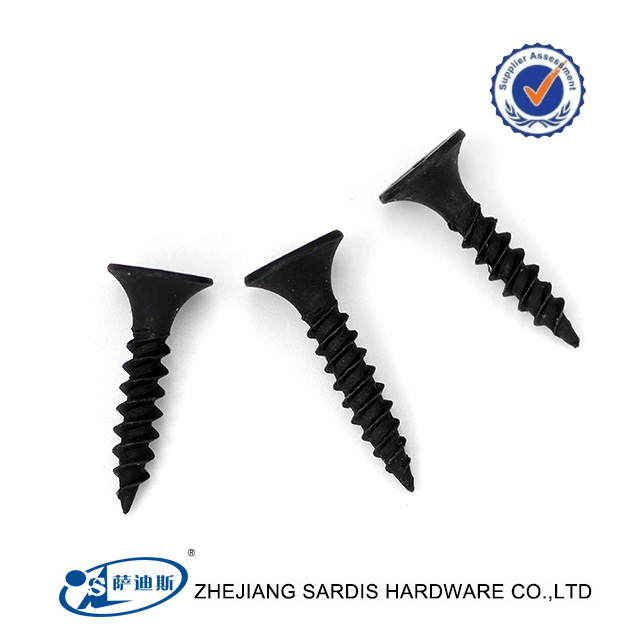
Wood-framed construction demands a very specific thread pitch to secure materials effectively. We define coarse options by their fewer, wider-spaced threads. These threads aggressively bite into softwood studs, such as pine, fir, and spruce. If you attempt to use fine-threaded hardware in softwood, the narrow threads will chew up the fragile wood fibers and strip the hole. The wider pitch of a coarse thread screw acts like a microscopic auger, pulling the shank deep into the framing timber while preserving the surrounding wood cellular structure.
We must also examine the physics behind the iconic bugle head. Engineers designed this specific curvature to solve a major installation problem. The bugle shape countersinks seamlessly into the delicate paper facing of the board. A traditional flat head acts like a wedge and tears the protective paper layer. Tearing this paper destroys the localized structural integrity of the gypsum core. The bugle shape compresses the gypsum core gently, creating a smooth dimple perfect for holding joint compound.
Your choice of drive type significantly impacts daily installation speed. The traditional #2 Phillips drive remains the global standard for basic installations. Most workers carry compatible bits, making replacement easy. However, we see a growing adoption of Torx and Square drives among high-end contractors. These specialized drives drastically reduce cam-out. Cam-out occurs when the bit slips out of the head during high-torque driving. Slipping damages the board surface and strips the head. Upgrading to a Torx drive helps your team power through dense wood substrates effortlessly.
Many novice builders misunderstand the purpose of the distinct black or dark grey finish on interior hardware. They assume it provides heavy-duty rust prevention. In reality, manufacturers prioritize chemical adhesion over extreme elemental protection. The primary function of a phosphate coated screw is to grab and hold drywall mud effectively. The slightly porous, micro-textured surface creates an exceptional mechanical bond with wet joint compound.
This strong bond prevents a common finishing defect known as flashing. Flashing occurs when the compound fails to adhere to the metal head, causing the hardware location to ghost through the final coat of interior paint. The phosphate layer ensures the mud locks in permanently, delivering a flawless, monolithic wall surface. It also provides a minor degree of lubricity, which reduces friction heat as the shank pierces the wood stud.
You must remain transparent about the corrosion realities of this finish. Phosphate provides only basic, dry-environment rust protection. It will fail if exposed to continuous high humidity or exterior weather. We can contrast this against alternative finishes:
Choosing the correct hardware length requires strict adherence to industry geometry rather than simple guesswork. The foundational rule of thumb focuses on embedment depth. A reliable construction fastener must penetrate the wood framing stud by at least 5/8" to 3/4". This specific depth zone ensures adequate holding power against the natural expansion and contraction of the building envelope.
To simplify procurement for your crews, we outline the standard matchups required for various board thicknesses. Adhering to these measurements prevents code violations and speeds up the ordering process.
| Gypsum Board Thickness | Recommended Hardware Length | Target Application Scenario |
|---|---|---|
| 1/2" Standard Board | 1-1/4" | Single-layer residential interior walls and ceilings. |
| 5/8" Type X Firecode | 1-5/8" | Commercial fire-rated partitions and garage separations. |
| Double-Layer Acoustic | 2" to 2-1/2" | Soundproofing walls, theaters, and specialized multi-layer firewalls. |
We must strongly warn against the common "longer is better" fallacy. Some installers grab 2-inch hardware for standard half-inch board, assuming the extra length provides superior hold. Over-penetration introduces severe, hidden risks. Wall cavities contain vital infrastructure, including electrical ROMEX wires and PVC plumbing pipes. Striking a live wire creates an immediate fire hazard, while puncturing a water pipe causes catastrophic internal flooding. A longer shank adds absolutely no functional pull-out strength once you surpass the optimal 3/4" embedment zone. Stick to the precise lengths specified above.
Your hardware delivery method dictates your daily labor expenditure. You generally face two primary formats: bulk loose hardware or collated strip systems. Loose options remain the best choice for small-to-medium residential renovations or complex, custom framing environments. They boast the lowest material cost per unit. However, they carry the highest labor time per installation. Workers must retrieve each piece by hand, position it on the bit, and drive it. This repetitive motion leads to dropped hardware, lost time, and increased physical fatigue.
Conversely, collated auto-feed systems act as essential upgrades for large commercial tracts or multi-family apartment builds. You need to calculate the exact ROI threshold for your business. The plastic-collated strips typically carry a 20-30% markup over bulk boxes. Yet, the time saved by continuous, rapid-fire driving easily outweighs this markup on high-volume jobs. Auto-feed guns allow workers to operate with one hand, improving balance on scaffolding and dramatically increasing daily output.
| Delivery Method | Ideal Project Scale | Labor Speed | Material Cost Efficiency |
|---|---|---|---|
| Loose (Hand-Drive) | Small renovations, custom builds | Slow to Moderate | Highest (Lowest cost per unit) |
| Collated (Auto-Feed) | Commercial tracts, multi-family | Extremely Fast | Lower (Premium upfront cost) |
Before transitioning to an automated system, we advise you to audit your current tool ecosystem. Proprietary collated strips often only fit specific brand-name auto-feed attachments. Do not commit to a massive bulk order of collated strips until you verify they cycle smoothly through your existing screw guns. Test for jamming issues and verify the bit engagement depth before rolling the system out to your entire crew.
Choosing the correct drywall screw for construction requires careful evaluation of multiple engineering factors. You must balance the thread pitch with the density of your framing substrate. You must align the exterior coating chemistry with your interior finish requirements to prevent paint flashing. Finally, you need to match your delivery method with your project scale to optimize labor costs effectively. Ignoring any of these elements invites unnecessary rework.
Take actionable steps today to improve your procurement strategy. We recommend purchasing a small test batch of hardware before signing off on pallet-scale orders. Evaluate the driver-bit fit carefully and monitor the cam-out rate on job site test runs. Inspect the coating consistency across the box to ensure reliable mud adhesion. Making these small, calculated assessments guarantees your wall assemblies remain durable, code-compliant, and visually flawless.
A: No. Metal studs require fine thread options to cut effectively through gauge steel. Coarse threads will chew the metal, strip the hole entirely, and fail to grip the stud securely.
A: Snapping usually stems from three issues: hitting dense knots in the wood, using improper torque settings on a high-powered impact driver, or purchasing low-quality, over-hardened steel that lacks minimal flexibility.
A: We strongly advise against it for structural loads. These components are brittle by design. They lack the necessary shear strength to support decking, shelving, or heavy structural wood framing safely.
A: You generally need roughly 28 to 32 pieces for a standard 4x8 sheet. Code usually dictates spacing them 16 inches apart on walls and 12 inches apart on ceilings, depending on local building regulations.